As an Amazon Associate, we earn from qualifying purchases. Some links on this site are affiliate links at no extra cost to you. Our recommendations are based on thorough research and editorial judgment.

How to Determine Your Exact Skin Undertone

Let’s figure out your exact skin undertone by checking those veins—blue or purple means cool, green means warm, and a mix suggests neutral or olive. Next, flash your jewelry: silver suits cool tones, gold suits warm, and if both shine on you, hello neutral! Notice how your skin reacts to sun—burning signals cool undertones, tanning hints warm. Grab foundations like NARS Sheer Glow for neutral or Fenty’s Pro Filt’r if you’re unsure. Want more tips to master your undertone game?
Key Takeaways
- Check the vein color on your wrist: blue/purple veins indicate cool undertones, green veins suggest warm undertones.
- Test jewelry effects: silver flatters cool undertones, gold enhances warm undertones, both suit neutral or olive undertones.
- Observe skin reaction to sun: skin that burns easily likely has cool undertones, while skin that tans quickly has warm undertones.
- Use a white cloth or paper near your face; a yellow or golden tint shows warm undertones, while pink or blue hints indicate cool undertones.
- Assess your hair and eye color: ashy or blue-based colors suggest cool undertones, gold or peachy hues signal warm undertones.
What Is Skin Undertone?

Skin undertone might sound like one of those beauty buzzwords, but it’s actually a key factor in making sure your makeup and wardrobe choices work together effortlessly. We’re talking about the subtle hues beneath our skin’s surface that don’t change with seasons or sun exposure. Skin undertones fall into cool, warm, neutral, or olive categories. For instance, cool undertones show hints of blue, pink, or purple, while warm undertones gleam with yellow, peach, or golden shades. Knowing this helps us pick foundation shade 120 for cool, or warm peach blush for warm undertones—making our complexion pop naturally. We usually use simple tests like checking vein colors or how certain jewelry looks on us—yes, even your grandma’s gold necklace matters here! Understanding this makes choosing makeup less guessing and way more fun. Selecting non-comedogenic foundation suited to your undertone can ensure your skin looks healthy without clogging pores.
Differences Between Skin Tone and Skin Undertone
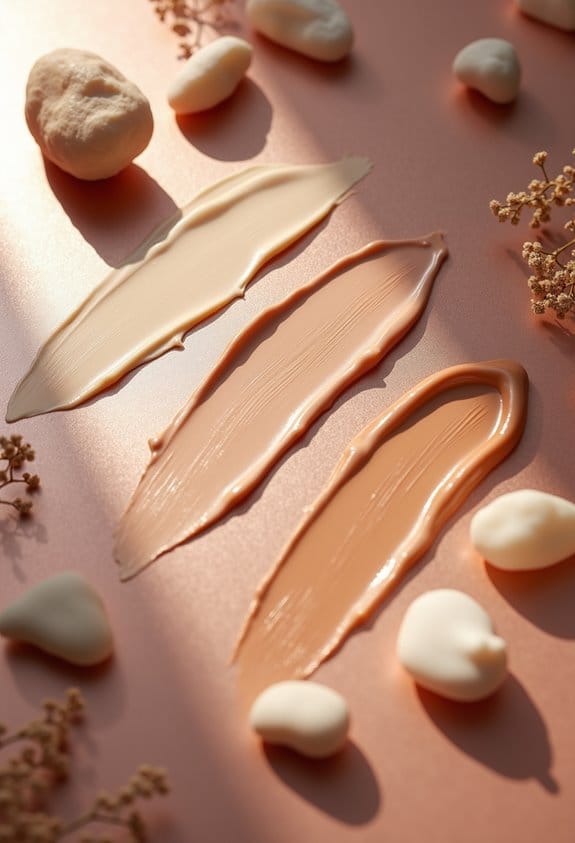
Although many of us lump them together, your skin tone and undertone are actually pretty different things—and knowing this can save you from makeup disasters, like that one time I bought foundation shade 300, thinking it’d be a perfect match (spoiler: it wasn’t). Skin tone is the surface color of our skin—fair, medium, or deep—and it can change depending on sun exposure. Undertone, however, is the subtle hue beneath our skin that stays consistent, no matter the weather. When we determine both correctly, we find products that truly complement our complexion. Remember, skin tone is about melanin levels, while undertone is about the cooler or warmer hues. Confusing these can lead to mismatched makeup, so it’s worth taking a careful look! Additionally, selecting makeup products that offer a good shade range ensures a better match for your unique complexion.
Types of Skin Undertones

When we immerse ourselves in the world of undertones, we quickly realize there’s more than just warm or cool to evaluate—actually, there are four key types that shape how our skin interacts with everything from foundation shades like MAC NC25 to clothing colors such as navy blue or burnt orange. Skin undertones fall into cool, warm, neutral, and olive categories. Cool undertones show pink, blue, or purple hues, while warm and cool are easy to mix up but warm undertones lean yellow, peach, or golden. Neutral undertones blend both, giving us flexibility with colors, and olive undertones add a greenish tint that’s tricky but cool since it works well with gold and silver jewelry. Learning to identify your skin undertone is like revealing a personalized style code—we get it right, and everything clicks. Additionally, choosing the correct makeup tools made from synthetic brushes can complement your undertone for a flawless application.
Recommended Products

Shade Matching: Determine if your skin tone is light, medium or deep. Determine skin undertone: what jewelry looks best on you? (a) white or silver indicates a cool undertone, (b) gold indicates a warm undertone, and (c) both indicate a neutral undertone.

Real Human Hair: Made from real human hair with a smooth, soft texture. Designed to blend naturally with your own hair and add volume. Suitable for washing, trimming, blow-drying, straightening, or curling (recommended below 357°F).

THE BEST BLACK LAVA SEA SALT: Crafted with utmost care and sourced from the finest ingredients, it embodies the essence of volcanic landscapes and the purity of the surrounding seas. It is carefully certified to guarantee its origin and to maintain the highest standards of purity.
How to Perform the Vein Test
Ever wondered if you’re missing a trick when picking that perfect foundation shade like MAC NC25 or the right clothing colors? The vein test is a simple way to figure out your skin undertone at home. Just look at the veins on the inside of your wrist in natural light. If your veins appear blue or purple, you probably have cool undertones, meaning shades with bluish hues will suit you best. On the other hand, greenish veins suggest warm undertones, so earthy colors and warmer foundation tones like NC25 might be your friends. If you see a mix of blue and green veins, guess what? You likely have neutral undertones, opening up a whole palette. It’s like your skin’s secret code waiting to be cracked! Understanding how to identify your undertone can make choosing colors that complement you much easier, much like selecting the right ergonomic design for better comfort and performance.
Recommended Products

🍑 POWERED BY PEACHSKIN PERFORMANCE FABRIC - Breathable, moisture-wicking, and temperature-regulating for cooler, more restful sleep. Exceptional softness that lasts wash after wash. PeachSkinSheets are crafted from ultra-fine microdenier performance microfiber to keep hot sleepers cool, dry, and comfortable all night.

Jewelry Test: Gold vs. Silver
Since choosing the right jewelry can feel like maneuvering a shiny minefield, the jewelry test comes as a handy shortcut to figuring out your skin undertone. Here’s the deal: jewelry tends to look different depending on your skin’s undertones. If silver makes your complexion pop, you probably have cool undertones. On the other hand, if gold adds warmth and glow, warm undertones are likely. Neutral undertones? Lucky you—both gold and silver play nice on your skin. To determine your undertone with this test, try on pieces in natural light, closely watching which metal makes your skin appear more vibrant and fresh versus dull or washed out. It’s like your skin’s little way of choosing its team—gold or silver—and helping you shine just right. Understanding your undertone can also guide you in selecting natural extracts in skincare products that best complement your complexion.
Recommended Products

Complete Testing Kit – Includes jewelry test solutions, digital scale, diamond tester, touchstone, magnifier, files, and reference bars for evaluating gold, silver, platinum, and diamonds.

ALL-IN-ONE GOLD, SILVER, PLATINUM, & DIAMOND JEWELRY TESTING & APPRAISAL KIT

This EASY to use genuine GTE Test kit will determine the karat value and purity of Gold, Silver, and Platinum Jewelry, scrap, bars, coins, and much more!
The White Cloth and Paper Test
While it’s easy to get lost in a sea of foundation swatches and makeup counters, the White Cloth and Paper Test offers a revitalizing simple way to uncover your skin’s undertone right at home. Grab a pure white cloth—none of those off-white detergents messing with us—and hold it up next to your face in natural light. Notice how your skin reacts? If it leans yellow or golden, hello, warm undertones! If it shifts towards pink or blue, you’re rocking cool undertones. Neutral undertones stay pretty steady, showing minimal color change. This white cloth test is a handy, no-fuss trick—think of it as your skin’s truth serum—to pick makeup shades and clothes that truly complement your complexion. No fancy tools needed, just honest, natural light and your own reflection. When selecting foundation, choose formulas that are hypoallergenic and non-comedogenic to ensure a gentle fit for your sensitive skin.
Assessing Your Hair and Eye Color
When it comes to figuring out your skin’s undertone, taking a good look at your hair and eye color can give us some solid clues. Generally, cool undertones pair with ashier hair colors—think platinum blonde or cool brown—and eye colors like blue, green, or grey. Warm undertones, on the other hand, are often complemented by hair shades like golden brown, auburn, or honey blonde, along with hazel, amber, or brown eyes that show golden flecks. If your features feel like a bit of both worlds, you might have a neutral undertone, which allows for a broader palette. Noticing the harmony between your hair color and eye color is key—it’s like your natural highlight combo that helps us nail down the undertone perfectly. Understanding your undertone can also guide you in selecting neutral shades for perfectly complementing your natural features.
Observing Your Skin’s Reaction to Sun Exposure
Sun exposure is like a natural mood ring for our skin, revealing clues about its undertone through the way it reacts. When we soak up some rays, our skin’s initial response can tell us a lot: if we burn easily, chances are we have cool undertones, often showing a reddish or pink flush. On the flip side, if we tan quickly, warm undertones probably dominate, lending a golden or bronzed hue. Spending just 15-30 minutes in the sun to observe these color changes helps us pinpoint our skin undertone more accurately. It’s worth remembering that while our skin tone shifts with sun exposure, our undertone stays steady—so let’s focus on that first reaction, not the eventual tan or burn. Additionally, using a foundation with SPF protection can help shield your skin while revealing its true undertone naturally.
Recommended Products

Provides exceptional all-day wear that resists creasing and caking, proven flawless for 24 hours. Formulated with deeply hydrating ingredients, comforts skin while minimizing the look of signs of aging and imperfections. Skin feels smooth and moisturized, even after makeup is removed.

Advanced Color Corrector for Dark Circles: This Luminous Eye Corrector SPF 41 is designed to vanish the look of dark circles instantly. The peach undertones in 4 different shades cancel common blue-ish under eye tones. It is a perfect under eye color corrector for dark circles.
Understanding Neutral Undertones
Because neutral undertones blend both warm and cool hues, they often leave us scratching our heads when trying to categorize them strictly. When your skin tone and undertone strike this balance, you might notice both silver and gold jewelry looking equally flattering—pretty convenient, right? The veins test can be confusing here, with bluish-green veins making it tricky to pick a side. For makeup choices, foundations like NARS Sheer Glow in Punjab (medium with neutral undertones) or Fenty Beauty Pro Filt’r in 210 often strike the perfect pink-yellow harmony without leaning too warm or cool. Neutral undertones give us the freedom to experiment broadly, wearing colors from rich earth tones to jewel hues without worry. It’s like having a free pass in the world of skin tone poker! For a smooth grooming experience that complements your skin’s natural tone, consider tools that feature hypoallergenic blades to minimize irritation and keep your skin healthy.
Choosing Makeup Based on Your Skin Undertone
How do you even begin picking makeup that truly enhances your natural undertone without feeling like you’re playing a guessing game? First off, foundation is our best friend here. If you have cool undertones, look for foundations with pink or blue hues—Super Stay 24Hr Skin Tint and Super Stay Powder Foundation work wonders. Warm undertones glow best with yellow or golden tones; products like Fit Me Matte + Poreless Foundation or Fit Me Oil-Free Concealer will brighten your face. Neutral undertones can flexibly rock both warm and cool options, like Instant Age Rewind Eraser Treatment Makeup. Remember, skin tones aren’t just about color; testing makeup application in natural light is key to avoid surprises. And if eyeshadows are your jam, cool tones pop with jewel hues, while warm tones excel in earthy shades. For the best results, consider a foundation with buildable coverage to perfectly match and enhance your undertone while providing the right level of coverage.
Recommended Products

100% PURE MONGOLIAN CASHMERE: Sourced directly from Mongolian herders and crafted into an ultra-soft, feather-light knit. This premium fiber is naturally thermoregulating and highly breathable, offering the ultimate cloud-like softness that heavy synthetic summer blends just can't match.

Weightless, breathable foundation with buildable medium coverage and a fresh, natural finish, designed to pair with Underpainting techniques, 1 fl oz (30 mL)

Giorgio Armani Luminous Silk Foundation #3.75 delivers a luminous, natural-looking glow.
Tips for Embracing Your Unique Skin Undertone
While figuring out our exact skin undertone might feel like decoding a secret message, embracing it truly opens the door to a more tailored beauty routine. Identifying your skin undertones helps us make smarter makeup choices, like opting for foundation shades that blend seamlessly—think warm undertones glowing with peachy tones, or cool undertones rocking rosy hues. Tools like the vein test (bluish means cool; greenish means warm) or the jewelry test (silver suits cool, gold suits warm) are our trusty guides here. Don’t shy away from playing with clothing colors either; it’s amazing how lime green looks on warm undertones but can make cooler types look like they’ve seen a ghost! Embracing your unique undertone lets us highlight our natural beauty confidently—no more guessing games or mismatched makeup mishaps.
Frequently Asked Questions
How Do I Find My Exact Undertone?
Let’s reveal the secret code of undertone difference by checking veins, jewelry, and sun reaction—this harmony guides us in perfect makeup matching, ensuring colors sing with our skin rather than clash awkwardly, creating flawless beauty.
How Do I Identify My Exact Skin Tone?
We identify our exact skin tone by making swatch comparisons under natural lighting, observing lighting effects throughout the day, and noting seasonal changes in our complexion. This helps us choose colors that truly complement our skin.
How Do I See My Actual Skin Color?
Like knights exposing truth beneath moonlight, we see our actual skin color by washing our face, using skin swatches in natural light, and making careful color comparisons, disclosing our true tones without illusions or shadows to mislead us.


