As an Amazon Associate, we earn from qualifying purchases. Some links on this site are affiliate links at no extra cost to you. Our recommendations are based on thorough research and editorial judgment.


The Science Behind Foundation Ph Levels and Skin Compatibility

We all want that flawless look, right? Foundation’s pH matters because our skin thrives best between 4.5 and 5.5—the natural acidity keeps dryness and irritation at bay. If your foundation drifts too alkaline, say above pH 7, you’re flirting with itchiness and clogged pores. Ingredients like glycerin help lock in moisture, while salicylic acid loves a lower pH for exfoliation. Picking a pH-balanced product not only protects but enhances your skin’s vibe—stick with me, and there’s more science behind your fave formulas to uncover.
Key Takeaways
- Skin thrives at a mildly acidic pH between 4.5 and 5.5, making this range ideal for foundation compatibility.
- Foundations with balanced pH prevent disruption of the acid mantle, reducing dryness, irritation, and sensitivity.
- Acidic foundations below pH 6 help control oiliness and minimize breakouts in acne-prone skin.
- Ingredients like glycerin, hyaluronic acid, and hypoallergenic compounds support hydration and skin comfort when pH-balanced.
- Alkaline foundations (pH above 7) risk causing dryness and irritation by disrupting skin’s natural acidity.
Understanding Ph and Its Relevance to Skin
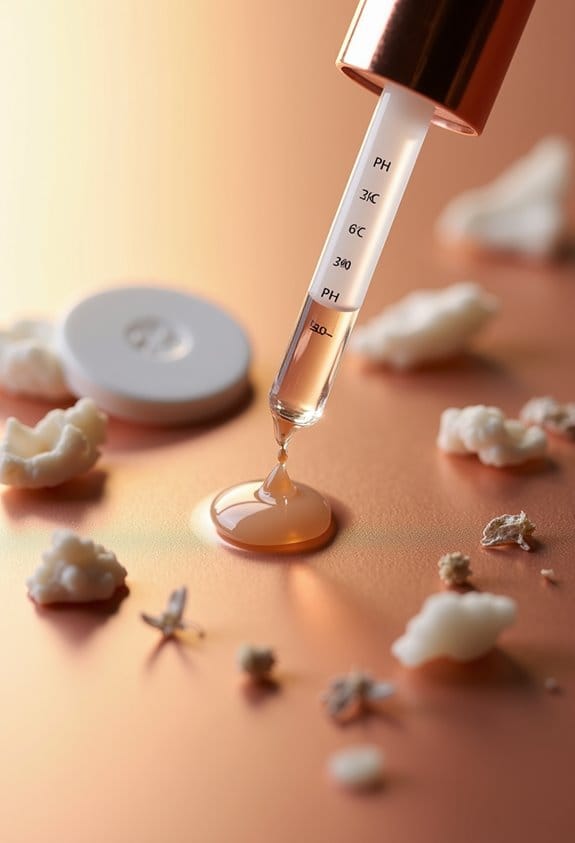
When it comes to foundation and skin health, pH is a bit like the unsung hero—you might not notice it, but once it’s off, your skin will definitely let you know. The pH scale, ranging from 0 to 14, measures acidity, and our skin thrives best with a slightly acidic pH between 4.5 and 5.5. It’s vital that foundation products maintain pH levels close to this range; cosmetic ingredients far from it can disrupt the skin’s natural balance, leading to dryness or irritation. Acidic foundations boost moisture and help produce ceramides, key for skin health, especially for acne-prone folks. So, keeping an eye on foundation pH makes sense—it’s like keeping your skin’s acidity in check to avoid chaos and keep you glowing. Who knew science could save your face! Additionally, formulations that are non-comedogenic ensure that maintaining skin’s pH balance goes hand in hand with preventing clogged pores and irritation.
Recommended Products

Ultra-Hydrating for Lasting Moisture: Sebamed Moisturizing Face Cream formulated with deeply hydrating ingredients, this moisturizer face cream delivers long-lasting moisture to keep your skin feeling soft and supple throughout the day. Its gentle formula helps lock in hydration, providing continuous comfort and protection against dryness.

BREATHABLE FOUNDATION FOR OILY & COMBINATION SKIN: Lightweight, non-comedogenic formula controls shine all day. Breathable mesh technology allows skin to function naturally without heavy, pore-clogging feel. Ideal for oily, combination, and acne-prone skin.

Complete 3-Step Routine – Targets sensitive, acne-prone skin with a dermatologist-developed regimen: cleanser, toner, and moisturizer
Natural Ph of Human Skin and the Acid Mantle
Picture the skin’s surface as a bustling city protected by a natural “security system” known as the acid mantle. This thin layer, made up of fatty acids and amino acids, keeps the natural pH of human skin mildly acidic—typically between 4.5 and 5.5. That acidic pH is crucial to maintain skin’s barrier, defending against harmful bacteria and moisture loss. When we use alkaline skincare products, we disrupt this balance, making skin prone to irritation and sensitivity—basically inviting trouble. Keeping that acid mantle intact helps regulate our skin’s natural moisturizing factors and supports healthy skin functions like keratinocyte activity. So, treating your skin gently and avoiding harsh cleansers guarantees your skin stays resilient, hydrated, and protected. Trust us, your skin will thank you for keeping its little security system happy and strong! Choosing hypoallergenic and non-comedogenic formulas helps maintain this delicate balance and protects sensitive skin from further irritation.
How Foundation Ph Influences Skin Health

Although foundation might seem like just the finishing touch to our makeup routine, its pH level plays a surprisingly big role in our skin’s health. Foundation pH levels typically hover between 4.5 and 7, matching our skin’s natural acidic pH, which guarantees better skin compatibility and less irritation. When we use pH-balanced foundations, they help maintain our skin barrier’s strength, supporting overall hydration and keeping our skin microbiome happy. This is especially important for acne-prone skin, where a foundation with a pH below 6 can reduce oiliness and discourage breakouts. On the flip side, alkaline foundations (pH above 7) mess with the acid mantle, causing dryness and irritation—basically the opposite of what we want. So, sticking to the right pH isn’t just science—it’s skincare smarts. Proper maintenance and gentle care of products and tools can further enhance skin compatibility by preventing irritation and maintaining product performance, much like how regularly cleaning precision eyeliner brushes preserves their integrity and safety.
Recommended Products

Tailored Age Specific Care: Designed for every age from teens to 60s, targeting skin concerns like acne, dryness, fine lines, and wrinkles

A facial spritz formulated specifically to help balance

BREATHABLE FOUNDATION FOR OILY & COMBINATION SKIN: Lightweight, non-comedogenic formula controls shine all day. Breathable mesh technology allows skin to function naturally without heavy, pore-clogging feel. Ideal for oily, combination, and acne-prone skin.
Key Ingredients and Their Ph Compatibility
Since foundation isn’t just about color and coverage, understanding how key ingredients play with pH can save us from unexpected skin drama—trust me, it’s not as boring as it sounds! In cosmetic formulations, pH values are essential to match the skin’s natural acidity, usually between 4.5 and 5.5. Ingredients like salicylic and glycolic acid need a more acidic environment, below 4.5, to exfoliate effectively, while zinc oxide prefers a neutral pH near 7 to stay stable as a mineral sunscreen. Silicone-based ingredients thrive at neutral pH too, giving that silky finish. It’s important for us to realize these pH differences play a vital role in how foundations work alongside skincare products, ensuring comfort and performance without the “oops” moments. Choosing hypoallergenic products can also help minimize irritation and ensure better compatibility with sensitive skin.
Recommended Products

Non-Chlorine Alternative: Use chlorine-free pool shock-oxidizer weekly to eliminate non-living matter, keeping your above ground or in-ground swimming pool water clean and safe


Interactions Between Foundation Ph and Skincare Products
When we layer foundation over our skincare, the interaction of their pH levels plays a surprisingly big role in how our makeup looks and feels throughout the day. Foundations usually sit around pH 6 to 7, close to our skin’s natural balance of 4.5 to 5.5, which helps with skin compatibility. But if your moisturizer or primer has a wildly different pH, it can cause pH disruption—think dryness or foundation not sticking right. Acidic foundations, with a pH below 6, can even work well with acidic skincare products, benefiting acne-prone skin by gently exfoliating. So, when picking your cosmetic products, keeping a balanced pH throughout your routine helps maintain your overall skin health and guarantees your foundation behaves just the way you want it to. Additionally, choosing foundations with beneficial ingredients such as niacinamide and hyaluronic acid can further support skin hydration and comfort while wearing makeup.
Recommended Products


Hydrating, Radiant Bronze Glow: Infuse your skin with a deep, hydrating glow. Our unique blend of probiotics, beta-glucan, and antioxidants offers a bronzed radiance that appears sun-kissed and luminous. Perfect for a radiant, healthy look.
Best Practices for Choosing Ph-Balanced Foundations
Picking the right foundation isn’t just about swatching shades under store lights or hearing rave reviews from friends—pH levels matter way more than we might think. For skincare that truly respects your skin’s natural acidity, aiming for pH-balanced foundations with a pH value between 4.5 and 5.5 is key. This range helps prevent irritation and dryness by keeping the acid mantle intact, unlike alkaline products that disrupt it. Ingredients like glycerin and hyaluronic acid aren’t just buzzwords—they actively boost hydration and improve moisture retention. Remember, your individual skin type matters a lot; oily, dry, or sensitive skin responds differently, so testing foundation performance is wise. Choosing wisely means better skin health, fewer surprises, and a flawless finish that lasts—because isn’t that what we all want? Additionally, opting for products with buildable coverage can help ensure a natural, seamless look adaptable to your skin’s needs throughout the day.
Recommended Products

DAILY BASICS TRIO: This daily skincare treatment set includes a full size Geothermal Clay Cleanser, Mandarin Cleansing Milk and Dew pH Perfector Toner to perfectly clean & prime facial skin

CERTIFIED ORGANIC FORMULA — Made with 75% certified organic + 25% wildcrafted and naturally-derived ingredients. Sourced from artisan distillers and ethical suppliers. No fillers, no synthetic additives, no shortcuts.

FLOATING FOREST: a unique aquatic green floral perfume that balances bergamot and black pepper with freesia, water lily, rose, and salted musk
Frequently Asked Questions
How Does Foundation Ph Affect Makeup Longevity Throughout the Day?
Did you know 70% of makeup wearers notice faster color fading? When foundation pH matches our skin, it boosts foundation stability, reduces makeup oxidization, and improves wear time by balancing oil control and hydration retention despite temperature fluctuations.
Can Foundation Ph Impact the Effectiveness of Sunscreen Layered Underneath?
Yes, foundation pH can impact sunscreen absorption and SPF effectiveness. When makeup formulation disrupts skin barrier or pH balance, it may cause chemical interactions affecting product layering and skin hydration, reducing overall sun protection and performance.
Are There Specific Skin Types That Benefit More From Certain Foundation Ph Levels?
Imagine a gentle rain nourishing a thirsty garden—foundation compatibility works like that. Oily, dry, combination, sensitive, mature, acne-prone, or with pigmentation concerns, we all benefit from foundations matching our skin’s unique pH balance.
How Does Foundation Ph Interact With Environmental Factors Like Humidity or Pollution?
Foundation acidity impacts moisture retention and skin barrier strength, helping us resist humidity’s effects and pollution effects. When we consider environmental interaction, a balanced pH reduces makeup oxidation, ensuring better daily wear and humidity resilience for our skin.
Does Foundation Ph Influence the Likelihood of Developing Acne or Breakouts?
Yes, foundation pH can affect acne triggers by disrupting our skin barrier and pH balance, increasing oil production and bacteria growth, which leads to clogged pores and inflammation. Choosing the right formula helps maintain a healthy daily routine.