As an Amazon Associate, we earn from qualifying purchases. Some links on this site are affiliate links at no extra cost to you. Our recommendations are based on thorough research and editorial judgment.


Understanding Color Theory in Makeup Application

When we talk about color theory in makeup, it’s all about understanding your skin’s undertones—cool, warm, or neutral—and using the color wheel to pick complementary or analogous shades. For instance, green correctors neutralize redness, while peach cancels blue under-eye circles. Warm tones like oranges and reds add a natural glow on medium skin, and cool blues work wonders for lighter skin. It’s a handy trick that instantly lifts your look, and there’s even more to uncover about perfecting this skill.
Key Takeaways
- Skin tones and undertones guide makeup color choices for natural and flattering results.
- The color wheel helps identify complementary and analogous colors for harmonious makeup looks.
- Complementary colors are essential for effective color correcting to neutralize unwanted skin tones.
- Matching eyeshadow, blush, and lip colors with undertones enhances overall color coordination.
- Lighting affects makeup color perception, so color theory aids in achieving the desired effect in various lighting.
The Basics of Color Theory in Makeup

Color theory in makeup is like the secret sauce that helps us make better choices, whether we’re picking a foundation or blending eyeshadow shades. Understanding skin tones is essential: they come in categories like fair, medium, or deep and have undertones—cool, warm, or neutral—that guide shade selection. The color wheel is our trusty guidebook; it shows how colors relate, with complementary colors sitting opposite and perfect for color correcting—think green concealer calming redness. Warm colors bring a glow, while using analogous colors, those side-by-side neighbors on the wheel, helps us create smooth, blended looks. Knowing how these concepts work together makes applying makeup less guesswork and more a fun science experiment—minus the goggles, thankfully! This knowledge means we pick shades that flatter rather than clash, making our faces a masterpiece, not a mishap. Using the right makeup brushes can enhance the application and blending of these colors for a flawless finish.
Exploring the Color Wheel

Although it might seem like something only artists or designers fuss over, the color wheel is actually our best friend when it comes to makeup. This circle of 12 hues, including the primary colors red, yellow, and blue, helps makeup artists like us choose the perfect shades to flatter various skin tones. By understanding complementary colors—which sit opposite each other and can neutralize unwanted tones—we can skillfully balance looks. For instance, green eyeshadow can mask redness, while peach tones brilliantly cover blue undertones. The color wheel also guides us in mixing color combinations, blending neutral colors with vibrant shades for harmonious or striking effects. So, diving into the color wheel isn’t just artsy—it’s essential for crafting flawless, personalized makeup looks every time. Trust us, your beauty routine will thank you! Choosing palettes with a good shade range is key to experiment with these color principles effectively.
Primary, Secondary, and Tertiary Colors Explained
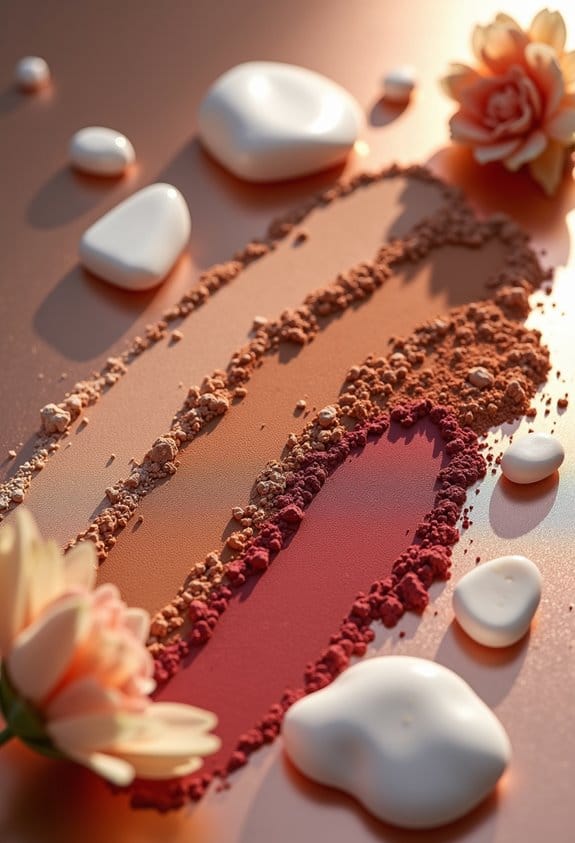
When we dig a little deeper into the color wheel, we find three key groups that make mixing makeup shades both an art and a science: primary, secondary, and tertiary colors. Primary colors—red, yellow, and blue—are the building blocks for every shade we craft. By blending two primaries, we get secondary colors like orange, green, and violet. Then, tertiary colors appear when a primary meets its neighboring secondary, such as red-orange or blue-green, adding nuance to our palette. In makeup artistry, mastering these categories improves color mixing and helps us tailor shades to complement various skin tones skillfully. While we’ll explore complementary colors soon, understanding these foundations guarantees we develop harmonious looks and avoid makeup mishaps, making our color choices smarter and our artistry sharper. Choosing makeup products with shade range options that match skin tones ensures more precise and flattering color application.
Complementary and Analogous Color Schemes
Since mastering the art of makeup often means knowing which colors work well together, understanding complementary and analogous color schemes can seriously up your game. Complementary colors sit opposite each other on the color wheel—think blue and orange—and deliver punchy contrast that’s perfect for bold looks. Plus, makeup artistry loves complementary colors for their role in color correcting; green color correctors banish red patches, balancing skin tones beautifully. On the other hand, analogous colors—those cozy neighbors on the wheel, like red, red-orange, and orange—create smooth, harmonious blends. They’re ideal for seamlessly shifting eyeshadows or blending blush. By thoughtfully mixing these schemes, we can either make features pop or keep everything effortlessly cohesive, turning basic beauty routines into polished performances anyone can nail. Using colored false lashes in complementary or analogous tones can further elevate these makeup looks with vibrant accentuation.
Warm and Cool Color Temperatures in Makeup
How do colors really change the way our makeup looks and feels? Warm colors like reds, oranges, and yellows instantly brighten and energize our features, while cool colors such as blues, greens, and purples offer a soothing, sometimes mysterious vibe. Understanding color temperature is essential in makeup application because it affects how well colors complement various skin tones and undertones without conflicting. Neutral colors like white, grey, and black act as our reliable sidekicks, balancing warm and cool shades for versatile looks. For example, testers often find warm colors add vibrant depth with lighter shades brightening, whereas cool colors excel in shading and highlighting, creating dimension with subtlety. Remember, lighting alters perception, so cool natural light flatters warm palettes, while warmer indoor light enhances cool tones—fancy that! Choosing the right foundation with shade-adaptive technology can further enhance how these colors interact with your complexion.
Identifying and Understanding Skin Undertones
Ever wondered why some foundations seem perfect on others but look off on you? That’s usually because of different skin undertones. We all have skin undertones—cool, warm, or neutral—that influence how makeup products like foundation blend with our complexion. Cool undertones show pink or blue hues and harmonize with silver jewelry, while warm undertones lean yellow or golden and pair well with gold. Neutral undertones mix both, giving us the best of both worlds. To identify yours, peek at your veins: blue or purple means cool, green means warm. Understanding these undertones is key in color theory since picking complementary shades helps your complexion look natural, not painted on. So, before grabbing foundation #25W, check your undertone—it’s the secret sauce for a flawless finish! Choosing a matte bronzer that complements your undertone can further enhance the natural sun-kissed glow of your makeup look.
Applying Color Theory for Matching Foundation
Knowing your skin’s undertone is a game-changer when picking out foundation that doesn’t scream “I’m wearing makeup!” Instead, it helps the product melt into your natural complexion like it was made just for you. Using color theory for makeup, we learn that matching both your skin tone and undertone is key—cool undertones pair best with pink or blue-based foundations, while warm undertones glow with yellow or golden bases. Testing on the jawline in natural light is our best bet to find a true match. Sometimes, a little mixing of shades is needed to perfect it—think of the color wheel as our trusty guide, using complementary colors to balance and neutralize imperfections without looking like we tried too hard. Because, trust us, nobody wants that “mask” vibe! Additionally, choosing foundations with hydrating ingredients can help maintain a natural glow and comfortable wear throughout the day.
Recommended Products

This palette contains substantially all of our warm HD creme foundation color range in our super palette style!

Must Have: Graftobian High Definition Cool Super Palette Includes the 18 Most Popular Neutral Glamour Creme Foundation Shades.

PROFESSIONAL MAKEUP: Graftobian Super Palettes are full-coverage foundations with a weightless feel that are suitable for makeup application, contouring, and touch-ups on the go. It comes in 18 colors in each palette, ranging from light to deep in warm, cool, or neutral undertones. They are designed for both professional makeup artists and makeup lovers.
Techniques for Effective Color Correcting
Anyone who’s spent time wrestling with makeup knows color correcting can feel a bit like decoding a secret language—but once we get the hang of it, the results are amazing. The key to effective color correcting lies in understanding complementary colors: green cancels redness, peach balances blue undertones in dark circles, and yellow brightens age spots or purple patches. Matching correctors to skin tone and undertones is essential—olive undertones may need specific shades for flawless correction. We’ve found a light layer of product prevents that dreaded cakey finish, especially on delicate skin. Layering techniques let us build coverage gradually, ensuring natural-looking makeup looks. Mastering this process not only enhances our color theory knowledge but transforms everyday makeup into a polished, seamless canvas. Additionally, incorporating primers with triple color correction pigments can amplify the redness reduction and overall skin appearance.
Recommended Products
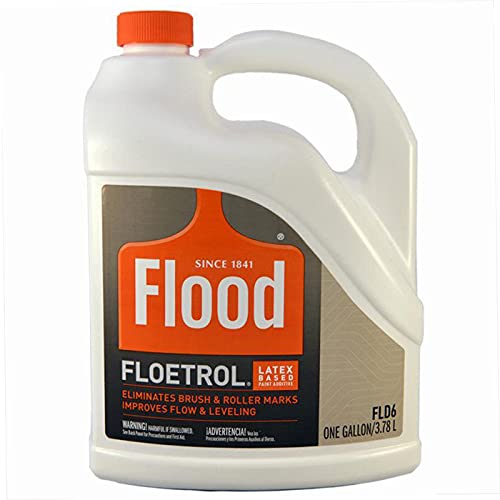
Makes latex paints and primers flow more smoothly

Address hyperpigmentation with this all-in-one regimen that immediately color-corrects and protects with all-mineral SPF 50.

Everything you need for naturally flawless looking skin in seconds
Using the Color Wheel to Enhance Eye Makeup
While it might seem a bit intimidating at first, using the color wheel to enhance eye makeup actually makes our job much easier—and more fun. The color wheel guides us in choosing eyeshadow shades that flatter our skin tones and make our eyes pop. For example, if you have warm skin tones, orange and red shades really bring out your eyes, while cooler skin tones can rock blues and purples. Playing with complementary colors, like orange on blue eyes, adds instant drama, whereas using analogous colors—like blending blue and green—creates a more harmonious look. Don’t forget, darker shades add depth and dimension in the crease, while lighter shades highlight the brow bone, helping us open up and brighten our eyes effortlessly. Many of the top neutral eyeshadow palettes offer blendable formulas that make applying these color techniques easier for both beginners and professionals alike.
Recommended Products

【Large LED Vanity Mirror】 Equipped with a full-size premium LED lighted mirror featuring 3 customizable light color modes (Warm/Natural/Cool White). Easily switch the lighting tone to match different room environments, delivering bright, even illumination for precise foundation blending, eye makeup, contouring and skincare routines, helping you achieve perfect makeup results every time day and night.

VERSATILE SHADE RANGE: Features a mix of matte, shimmer, and metallic tones perfect for everyday wear or bold, evening looks.
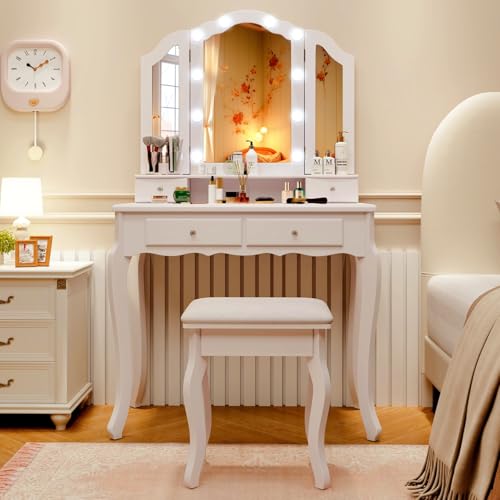
[Illuminated Tri-Fold Mirror]: This tri-fold mirror features 10 adjustable Hollywood LED lights, providing a clear and well-lit reflection at any time of day. The mirror includes a touch control switch for easy operation: a long press adjusts the brightness to your preference.
Combining Colors for Blush, Lips, and Cheeks
We’ve seen how the color wheel can make eye makeup pop, but now let’s chat about blending colors for blush, lips, and cheeks—that trio that truly ties a look together. When choosing blush colors, consider your skin undertones: cool undertones shine with pinks or plums, while warm skin undertones glow with peach or coral shades. Using color theory, complementary colors help balance lips and cheeks; for example, a warm peach lipstick pairs well with a cooler-toned blush to avoid overwhelming your look. Analogous colors, like soft pink blush with rose lips, create harmony and cohesion. Remember, makeup application is about balance—bold lips need subtle blush, while vibrant cheeks work better with softer lips. Neutral blush shades, like mauve or brown, offer versatile, no-fuss options that suit almost any lip color. For optimal lip definition and longevity, pairing your lip color with a nude lip liner suited to your skin undertone enhances both hydration and wear.
Recommended Products

Customizable and Refillable Design: Our PRO palette is 100% customizable and refillable for long-lasting use

Apply RCMA lightly to the skin for a flawless finish perfect for HD or everyday wear. With 18 colors to mix and match, you'll find there are endless possibilities of different skin tones, all in one palette!

PROFESSIONAL QUALITY: The RCMA MAKEUP Brush Collection is designed in collaboration with Royal & Langnickel, bringing 75+ years of brush-making expertise to your makeup routine.
Adapting Makeup Colors for Different Lighting Conditions
Because lighting can dramatically change how makeup colors look, it’s essential we think beyond just the shades in the palette. Different lighting conditions—say, cool natural light versus warm artificial light—can transform how primary colors show up on our skin tone and reveal or mask undertones. For example, warmer lights often amp up cool-toned makeup, making it pop, while daylight gives us a more truthful picture of color and tone, helping perfect blending. In make-up artistry, understanding these shifts lets us select makeup colors that suit various environments, ensuring the look feels natural everywhere. And remember, neon or bright shades might get muted under low light, so we might need to go bolder than usual to really wow viewers—because who wants their makeup playing hide-and-seek, right?
Recommended Products

180° Trifold Mirror with Detachable Magnetic Magnifier - Engineered for precision grooming, the three-panel folding design provides a comprehensive 180° viewing angle, enabling multi-directional visibility for flawless makeup application, skincare, or beard trimming. The integrated removable magnetic magnifying glass enhances functionality, offering close-up detail for meticulous routines while maintaining effortless detachment for cleaning and storage

48" Large Size HD Lighted Mirror & Adjustable Light:T4TREAM modern fluted makeup vanity features a spacious 48’‘ HD mirror with built-in LED lighting, offers a clear, accurate reflection and perfect visibility for every beauty step. Choose from 3 color modes-cool light, natural light and warm light-easily adjust the brightness to match any time of day.Whether you're getting ready for work or a night out, this mirror helps you look your beauty in any light.

Modern Minimalist Design with Comfort and Practical Use: This makeup vanity desk with lights and chair features a clean modern design with elegant silver handles and smooth, simple lines, creating a more refined and upscale look. At the same time,big white vanity with mirror and lights comes with a soft velvet stool that offers a comfortable seating experience, making it a practical and stylish choice that balances both aesthetics and everyday usability.
Frequently Asked Questions
How Does Color Theory Influence the Choice of Makeup Brushes and Tools?
We choose brushes with specific materials and ergonomic designs to match colors precisely, applying blending techniques for seamless changes. Reviewing application methods helps balance precision vs. coverage, while tool maintenance tips keep colors true and tools effective.
Can Color Theory Help in Creating Special Effects Makeup?
When we created a fiery dragon look, special effects relied on color harmony and contrast techniques. By mastering color mixing, understanding skin tones, and using thematic approaches, we heightened illusion creation, bringing the makeup’s magic vividly to life.
What Role Does Color Theory Play in Permanent Makeup or Tattooing?
We rely on color mixing techniques and pigment undertones to match skin undertones perfectly, ensuring lasting tattoo longevity effects. By understanding fading color dynamics and makeup color palettes, we apply color correction methods for beautiful, enduring permanent makeup results.
How Can Color Theory Be Applied to Makeup for Different Age Groups?
We love pairing youthful looks with vibrant hues and mature elegance with softer, muted tones. By considering skin undertones and aging gracefully, we balance color selection and makeup trends to create age-appropriate styles that truly complement every stage.
Does Cultural Background Affect the Use of Color Theory in Makeup?
Yes, cultural background greatly influences how we apply color theory in makeup through cultural norms, beauty standards, and color symbolism. Regional influences, makeup traditions, skin tones, and aesthetic preferences shape our choices and creativity uniquely for each culture.