As an Amazon Associate, we earn from qualifying purchases. Some links on this site are affiliate links at no extra cost to you. Our recommendations are based on thorough research and editorial judgment.

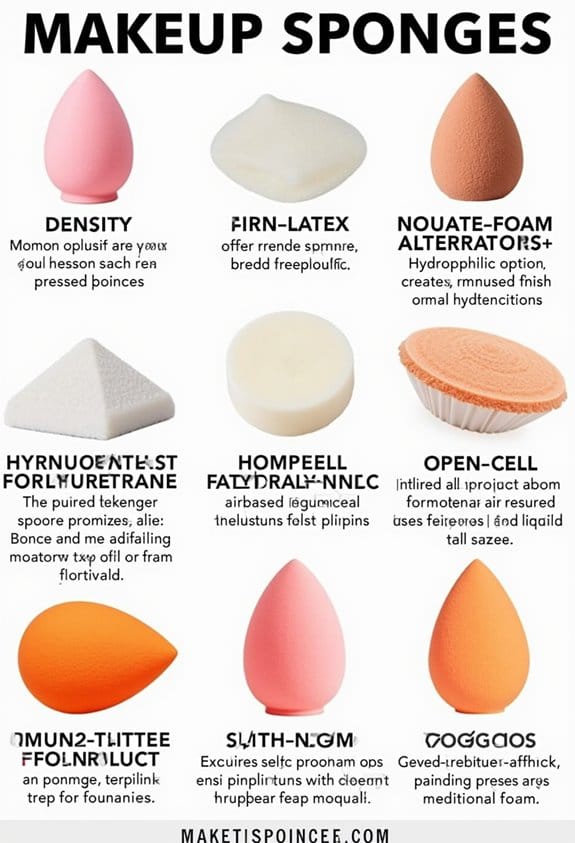
Understanding Makeup Sponge Materials and Textures

When it comes to makeup sponges, knowing your material makes a huge difference. Hydrophilic foam expands wet for that flawless, airbrushed finish, while silicone-coated ones save product—ideal for heavy coverage but less squishy. Microfiber-infused types blend softly with buildable coverage, and natural sea sponges are gentle for sensitive skin but less detailed. Absorption rates vary too, which means picking the right sponge helps control shine and finish, without wasting foundation. Stick with us, and you’ll nail your perfect match in no time.
Key Takeaways
- Hydrophilic foam sponges expand when wet and provide a smooth, airbrushed makeup finish.
- Silicone-coated sponges minimize product waste with a smooth, less flexible surface ideal for high coverage.
- Microfiber-infused sponges offer a soft, velvety texture that allows buildable makeup coverage.
- Natural sea sponges are gentle, eco-friendly, and suitable for sensitive skin with a soft texture.
- Sponge materials vary in absorption rates, affecting makeup application and suitability for different skin types.
Types of Makeup Sponge Materials
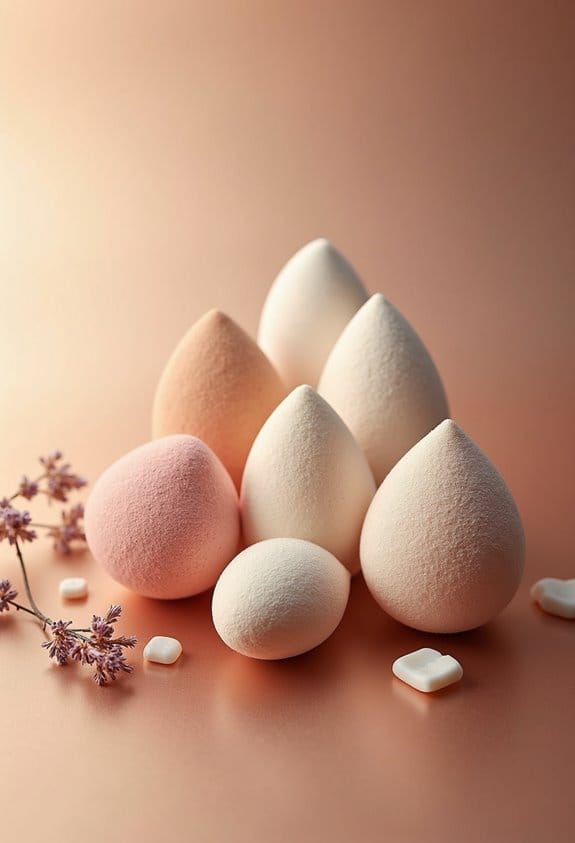
When it comes to makeup sponges, we’ve got quite the lineup of materials to choose from, each bringing its own flair to our beauty routine. The classic hydrophilic foam expands when wet, offering great flexibility and superior absorption capabilities that help create that coveted airbrushed finish. Then, silicone-coated sponges step in, minimizing product waste and making cleanup a breeze—but heads up, they’re less flexible, best for high-coverage makeup application. For those who like a velvety touch, microfiber-infused sponges blend softness with less absorption, perfect for buildable coverage. And let’s not forget natural sea sponges, a gentle, eco-friendly pick for sensitive skin, prized for their softness despite being a bit less detailed. Each texture impacts how smoothly our makeup goes on and how it lasts all day. Many high-quality options are also designed to be latex-free, making them ideal for sensitive skin while reducing allergy risks.
Recommended Products

UNMATCHED SOFTNESS, NO WATER NEEDED – Our memory foam makeup sponge adapts to your skin’s warmth, delivering ultra-soft, flexible blending without needing water. Enjoy the softest sponge on the market for flawless results every time.
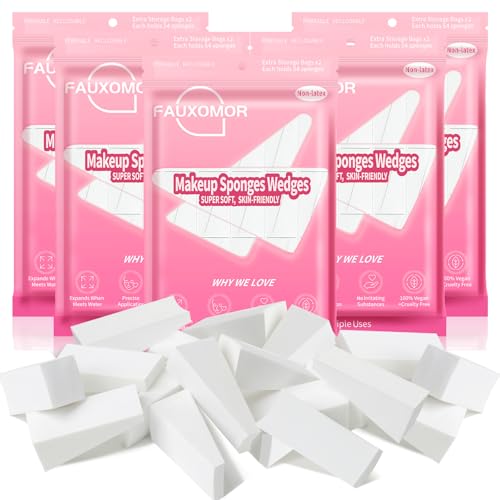
New and Perfect Version: Our foundation sponge is made of hydrophilic polyurethane, which is soft, highly elastic, thicker, and easier to grip for makeup application. With an upgraded cutting technique, it tears apart easily for daily use, featuring a smooth surface that won’t feel rough or fragile, and is free from irritating odors. It has ten beautiful protective pouches to protect it from damage and dirt.
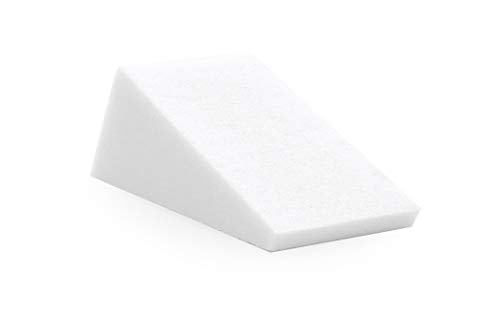
PERFECT WEDGE SHAPE: Triangle wedge sponges are ideal for applying and blending foundation, blush, concealer, and eye shadow, and work great for smooth Halloween makeup looks.
Texture Variations and Their Effects
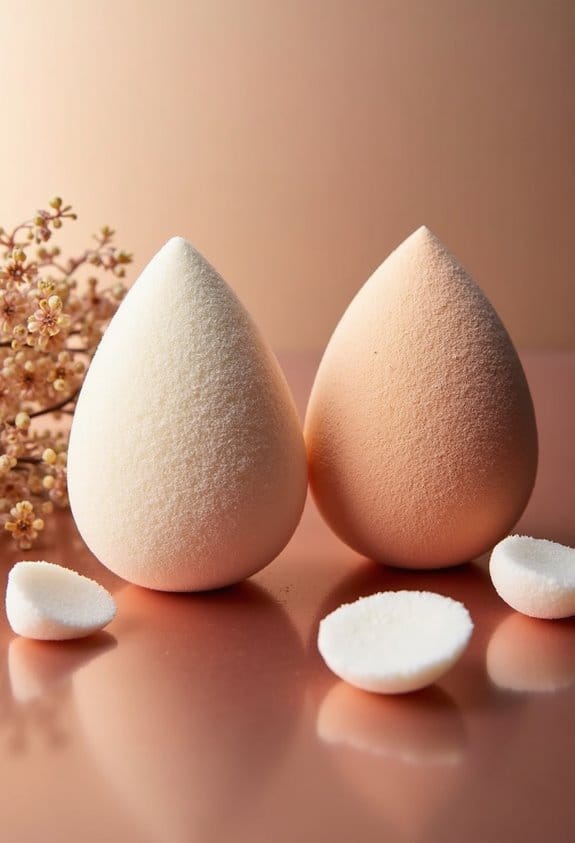
Now that we’ve covered the types of materials makeup sponges are made from, let’s chat about how those materials affect texture—and why that matters for your look. Texture variations play a big role in makeup application. Take hydrophilic polyurethane foam—it softens when wet, creating that flawless, airbrushed finish we all chase. Silicone-coated sponges, meanwhile, have a smooth surface that reduces product absorption but can feel a bit stiff for detail work. Microfiber-infused sponges offer a velvety texture, like a makeup brush, giving buildable coverage, though cleaning them isn’t exactly a breeze. Natural sea sponges are super soft and perfect for sensitive skin, but they might not handle intricate looks. And don’t forget high-density sponges—they’re great for oily skin, providing fuller coverage without soaking up all your product. Additionally, silicone makeup sponges are praised for their non-absorbent material, which reduces product waste by about 50%, making them both economical and hygienic.
Choosing the Right Sponge for Your Skin Type
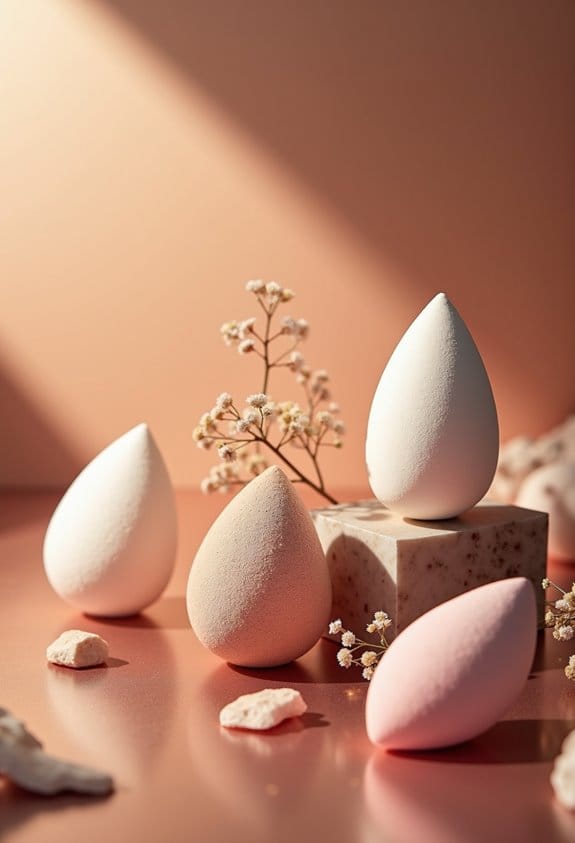
Since every skin type needs a different kind of TLC, choosing the right makeup sponge isn’t just about the brand or shape—it’s about matching the sponge’s material and texture to what our skin actually craves. For dry skin, hydrophilic polyurethane sponges are a game changer—they expand when wet, grip liquid products without soaking them all up, and leave a fresh, dewy finish. Oily skin? Silicone-coated sponges don’t absorb your precious foundation, helping cut down shine while offering solid coverage. Sensitive types, we see you: hypoallergenic sponges—like latex-free types or natural sea sponges—are gentle and kind to delicate skin. For versatility, microfiber-infused sponges blend softness with buildable coverage, working well across skin types. So, knowing your skin’s quirks helps us pick the best sponge and master flawless application every time. It’s also important to consider that latex-free sponges minimize irritation and maintain durability for sensitive skin users.
Recommended Products

COMPLETE PROFESSIONAL WORKSTATION: The ultimate "Business in a Box" for MUAs. Includes 24 x 32g cakes, 2 massive 90g base colors, 5 large 50g split cakes, and 3 one-stroke cakes for infinite design possibilities. A trusted, global favourite for 15+ years.

Formulated for use on the face and body using cosmetic-grade ingredients

Formulated for use on the face and body using cosmetic-grade ingredients
Absorption Rates and Makeup Application
Although it might seem like a small detail, the absorption rate of your makeup sponge can make or break your entire look—we’ve learned this the hard way after wasting way too much foundation (looking at you, sponge #3). High-absorption sponges soak up more product, which actually works well for oily skin since it helps prevent excess shine. On the flip side, low-absorption sponges, especially those made from hydrophilic polyurethane foam, hold onto more makeup, giving dry skin that coveted dewy finish without gobbling up your product. Silicone-coated sponges take it a step further—they minimize product uptake, perfect for those high-coverage days. Knowing these absorption rates guides us in tweaking our makeup application techniques to maximize product usage and achieve flawless results every time. Additionally, pairing the right sponge with proper stippling techniques can further enhance a seamless and natural foundation finish.
Recommended Products

Skin Nurturing Ingredients: Infused with Moringa Seed oil, Vitamin E, Rosemary, Grape Seed Extracts as antioxidants and Zinc Oxide to give your skin a natural layer of protection against free radicals.

Made with lightweight silicone. Defends against free radicals

Korea’s No.1 Sponge Brand – Developed by experts in Korean beauty, this high-quality makeup sponge ensures a flawless application, trusted by professionals for a seamless finish
Maintenance and Cleaning Tips for Sponges
Getting the most out of your makeup sponge doesn’t just mean picking the right one for your skin and foundation type—it also means keeping it clean and in good shape. Regular maintenance is key: we recommend washing your sponge at least once a week with a gentle cleaning agent, like a mild soap or shampoo, to prevent bacteria buildup and irritation. If you have sensitive skin, clean it after every use to maintain excellent hygiene. Don’t overdo it with the soap—a small drop is enough to clean easily without leaving residue, which can harm your sponge’s performance. Avoid dishwashers or washing machines; you’ll ruin the sponge’s texture. Plus, keep an eye on wear and foul odors, and replace sponges every three months to keep your makeup looking flawless and your skin happy. Proper storage in a clean, dry container also helps reduce bacteria growth and extends the sponge’s usability.
Durability and Cost Considerations
When it comes to makeup sponges, choosing one that lasts can save us a lot of hassle—and money—down the line. High-quality makeup sponges made from durable materials like hydrophilic polyurethane foam resist ripping and tearing, extending their lifespan and ensuring consistent performance. Though investing in a premium sponge might feel like splurging upfront, it’s a cost-effective choice because it cuts down on product waste and frequent replacements. Cheaper sponges not only degrade faster but often perform poorly, leaving us frustrated and out more cash. For those eco-conscious among us, biodegradable sponges offer a sustainable option without sacrificing durability. Just remember, proper cleaning is essential to maximize your sponge’s lifespan—because even the best sponge can’t save us from neglect! Additionally, regular cleaning prevents bacteria buildup that can compromise both sponge integrity and skin health.
Recommended Products

【Complete 6-Piece Kit for Professional Makeup Application】 This comprehensive makeup tool set includes 5 specialized makeup sponges and a fish tail foundation brush for creating a polished base. Each tool is designed to tackle different makeup textures and achieve a flawless finish. Also includes a decorative apple fridge magnet.
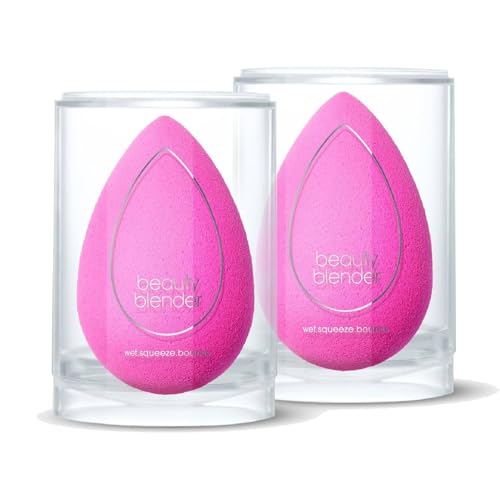
SMOOTH BLEND: The award winning aqua-activated sponges grow to about twice their size when wet, and absorbs minimal product so your formula lands on your complexion and not your sponge. Bounce and blend the soft sponge to a smooth finish.

The Ultimate Holiday Trio: Step into a season of blissful blending with this limited-edition 3-piece set—featuring one Beautyblender sponge, two Blotterazzi compacts, and a mini Blendercleanser for the perfect festive glow.
Frequently Asked Questions
What Is the Best Material for Makeup Sponges?
We think hydrophilic polyurethane foam offers the best makeup application, balancing sponge durability, moisture retention, and blending techniques. For eco-friendly options, natural sea sponges shine. Exploring brand comparisons, color variations, cleaning methods, and price ranges matter too.
How to Use Different Types of Makeup Sponges?
We use different sponge sizes and colors for precise application techniques, blending tips, and makeup looks. Avoid common mistakes by choosing product compatibility wisely. Don’t forget sponge maintenance and cleaning methods for travel-friendly options that last longer.
What Is the Best Material for a Sponge?
Like finding a needle in a haystack, the best material balances sponge durability, elasticity, density, and absorption with sponge hygiene and versatility. It guarantees smooth makeup application, easy sponge cleaning, and excellent skin compatibility for flawless looks.
What Are Different Shapes of Makeup Sponges For?
We use teardrop shape sponges for all-over blending, mini sponges for precise areas with angled tips, and flat edge or square base sponges for sculpted contouring. Silicone sponges offer a multi-functional design with easy cleanup.