As an Amazon Associate, we earn from qualifying purchases. Some links on this site are affiliate links at no extra cost to you. Our recommendations are based on thorough research and editorial judgment.


Understanding Different Makeup Brush Hair Types

When it comes to makeup brushes, knowing hair types is clutch. Natural hairs like sable are detail pros, perfect for precise lining, while goat hair handles powders smoothly. Synthetic brushes, especially nylon and taklon, rock with liquids and creams and avoid shedding—win-win if you’re sensitive or eco-conscious. Mixed-fiber brushes blend versatility and durability, great for both powders and creams. Picking the right brush depends on your skin, budget, and technique preferences. Stick with us for the full scoop on mastering your brush game.
Key Takeaways
- Natural hair brushes like sable and goat offer precise application and excellent powder blending but may cause allergies in sensitive skin.
- Synthetic brushes, including nylon and taklon, are hypoallergenic, durable, non-shedding, and ideal for liquid and cream products.
- Mixed-fiber brushes combine natural and synthetic advantages, providing versatility for both powder and creamy makeup textures.
- Choosing brush hair depends on skin sensitivity, ethical preferences, durability needs, and budget considerations.
- Specific brush shapes combined with hair types optimize techniques, such as flat brushes for foundation and angled for eyeliner precision.
Natural Brush Hair Types and Their Benefits

Although synthetic brushes have their perks, natural hair brushes still hold a special place in our makeup bags because of their unique textures and performance. When we talk about natural brush hair types, each brings something special to the table. Sable brushes, with their thin, precise bristles, are perfect for detail work like lining eyes or lips—think of them as the surgeon’s tools of makeup. Goat hair brushes, on the other hand, are soft yet durable, superb for picking up powders like bronzer or blush and blending them seamlessly. Pony hair strikes a nice balance, great for applying eyeshadows and highlighters. Meanwhile, squirrel hair is incredibly soft, ideal for sensitive skin and gentle blending. Knowing these natural types helps us pick the right brush every time—no more makeup mishaps! However, for those with sensitive skin, brushes made with hypoallergenic synthetic fibers can sometimes be a better choice to avoid irritation.
Synthetic Brush Hair Types and Ideal Uses

We’ve all enjoyed the natural feel of goat or sable brushes, but synthetic options bring their own kind of magic to the makeup table. Synthetic brushes, especially those made from nylon, stand out for their toughness—they’re perfect for applying liquid foundations and cream products without losing their shape. Taklon brushes, a softer synthetic variant, feel gentle while staying hypoallergenic and even repel bacteria, making them great for sensitive skin. If you’re on a budget but need solid everyday performance, polyester blend synthetic brushes blend eyeshadows smoothly without fuss. These synthetic brushes don’t shed, clean easily, and generally outlast natural hair, making them a smart buy for anyone serious about their makeup game. Trust us, your brush cleaner will thank you too. Additionally, maintaining your tools with proper cleaning and maintenance extends their lifespan and ensures hygiene.
Mixed-Fiber Brushes for Versatile Makeup Application
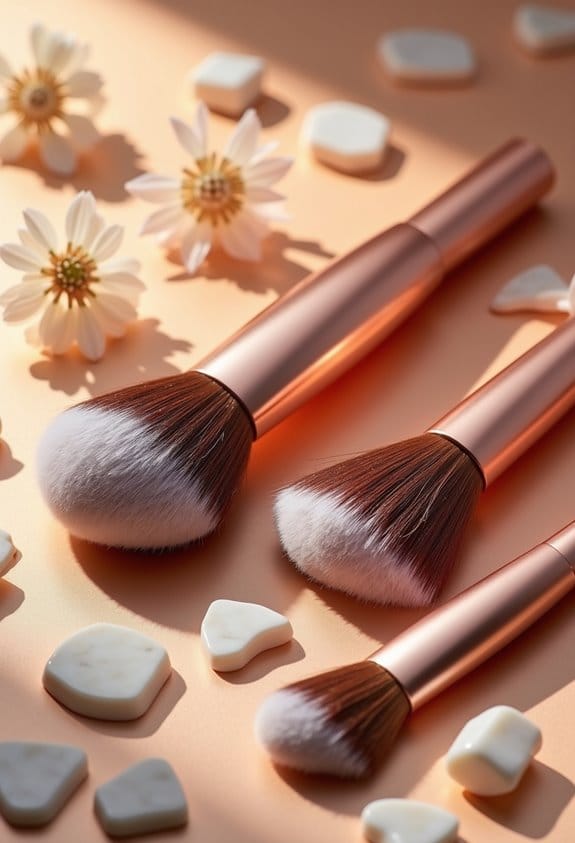
Anyone who’s tried both natural and synthetic brushes knows that each has its perks—but mixed-fiber brushes cleverly combine the best of both worlds. These brushes capture the powder-grabbing power of natural hairs while keeping the smooth, easy application typical of synthetics. We’ve found mixed-fiber brushes really shine when working with a variety of textures—from finely milled powders to creamy blushes—offering superb blendability and control. Makeup artists often swear by them for their versatility, handling everything from light dusting to precise contouring without missing a beat. Plus, mixed-fiber brushes tend to last longer and are easier to clean compared to using just one type of hair. Honestly, these brushes are like the Swiss Army knives of makeup tools—so handy, we wonder why we didn’t jump on the bandwagon sooner! Their durability and quick-drying nature make them especially suitable for professional and frequent use.
Selecting the Right Brush for Specific Makeup Techniques
Once we appreciate how mixed-fiber brushes marry the strengths of natural and synthetic hairs, it’s easier to understand why picking the right brush shape and material for each makeup task makes a world of difference. For flawless makeup looks, using a flat foundation brush offers precise control with liquid foundations, while a kabuki handles creams and powders with even, full coverage. When it comes to eyeshadow, tapered blending brushes tackle crease work, and fluffy ones create those dreamy seamless shifts. Angled brushes are our go-to for sharp eyeliner and brow definition, while detailer brushes nail spot concealing with accuracy. Don’t forget: natural hairs excel with powders, synthetic ones with creams. Choosing wisely isn’t just a brush thing—it’s the secret sauce for makeup looks that truly pop. Additionally, ergonomic handle designs enhance comfort and control during application, making the makeup process smoother and more enjoyable.
Factors to Keep in Mind When Choosing Brush Hair Types
Although picking the perfect brush shape is essential, understanding the hair type is equally important for a flawless makeup routine. First off, skin sensitivity matters a ton—we want to avoid irritation, so hypoallergenic synthetic fibers often win for those with delicate skin. Plus, if you’re like us, ethics come into play: good news, vegan synthetic brushes can offer cruelty-free, durable options without sacrificing performance. Speaking of durability, synthetic brushes typically resist shedding and handle frequent washings better than natural hair, though they can be a tad less soft. Budget’s another factor—affordable synthetics provide versatility, but investing in high-quality natural brushes might be necessary for certain techniques. It’s a balancing act, but choosing wisely guarantees our brushes work hard and last long without any skin freak-outs. Additionally, many vegan brushes feature eco-friendly materials like bamboo and recycled aluminum, enhancing durability and environmental responsibility.
Best Practices for Brush Care and Maintenance
While it might seem tempting to skip regular brush cleaning—especially when we’re rushing through our morning routines—keeping our makeup brushes in top shape is actually a game-changer for both application and skin health. Let’s be honest: nobody wants patchy foundation or a blotchy eyeshadow look caused by grimy brushes. Synthetic brushes can handle a stronger cleanser without losing their shape, while natural hair brushes need gentle soap to stay soft and functional. After washing, always reshape your bristles and lay them flat to dry—no one wants silly, splayed-out brushes ruining a flawless makeup look! Store them upright in clean containers, prevent crushing, and avoid overloading them with product to keep blending smooth. Weekly cleaning might sound like a chore, but trust me, your skin and makeup game will thank you. Regular cleaning with warm soapy water is essential for maintaining brushes and extending their lifespan.
Recommended Brush Sets for Various Skill Levels
When we’re just starting out with makeup, picking the right brush set can feel like maneuvering through a jungle gym blindfolded—trust me, I’ve been there! For beginners, recommended brush sets for various skill levels usually focus on synthetic brushes, since they’re affordable, easy to clean, and won’t gulp up your product. Starter kits often include must-haves like foundation, powder, blending, and detail brushes, making makeup less intimidating. As we grow more confident, professional-level kits offer a wider range of precise tools and multiple blending brushes for complex looks. Travel-friendly brushes are great for quick touch-ups; they’re compact but still pack a punch in performance. Choosing the right set truly boosts how well makeup applies, ensuring smooth, even finishes every time without feeling like rocket science. Additionally, ergonomic handle design minimizes hand fatigue and improves control, making makeup application more comfortable for beginners and pros alike.
Frequently Asked Questions
How Often Should Makeup Brushes Be Replaced?
Think of our makeup brushes as trusted steeds; their Brush Longevity depends on how we care for them. We should replace them every 1-3 years to guarantee they remain fresh, clean, and ready to carry our beauty journeys forward.
Are Animal-Hair Brushes Cruelty-Free?
Animal-hair brushes aren’t cruelty-free since they involve ethical considerations about sourcing. If we want to avoid harm, choosing synthetic brushes is best—they’re kinder to animals and often just as effective for our makeup needs.
Can Brush Hair Type Affect Skin Sensitivity?
Yes, brush hair type can affect hair sensitivity on our skin. Softer synthetic hairs usually cause less irritation, while some animal hairs might trigger reactions. So, we should choose brushes considering our skin’s hair sensitivity for comfort.
Do Synthetic Brushes Work Well With Vegan Makeup?
You might be surprised—yes, synthetic brushes work amazingly well with vegan makeup! We love their vegan compatibility because they’re cruelty-free, durable, and don’t absorb product, making application smooth and ethical. Let’s embrace this beauty choice together!
How Does Brush Hair Length Impact Makeup Application?
Brush hair length influences how product applies; longer hairs offer softer, diffused coverage, while shorter hairs provide more precision and control. Together with brush texture, this balance helps us achieve flawless, tailored makeup finishes every time.