As an Amazon Associate, we earn from qualifying purchases. Some links on this site are affiliate links at no extra cost to you. Our recommendations are based on thorough research and editorial judgment.


Understanding Antibacterial Properties in Makeup Tools

We’ve found that antibacterial makeup brushes, often embedded with silver ions, slash bacterial growth by up to 99.9%, making your skin’s best friend—especially if it’s sensitive or prone to pesky breakouts. These brushes usually feature smooth synthetic fibers, so they’re easy to clean and last longer without shedding like our natural-fiber yesterdays. Just keep in mind their antibacterial coating wears out around two months, so regular washing and timely replacements keep things fresh. Stick around, and we’ll unpack all you need to know.
Key Takeaways
- Antibacterial makeup brushes contain silver ions that reduce bacterial growth on fibers by up to 99.9%.
- Silver ions disrupt bacterial cell walls, preventing reproduction and skin contamination.
- Synthetic brushes with antimicrobial technology are durable and easier to clean than natural fiber brushes.
- Regular cleaning and washing are essential to maintain antibacterial effectiveness and hygiene.
- Special antibacterial coatings typically last around 60 days before needing replacement.
What Are Antibacterial Makeup Brushes?
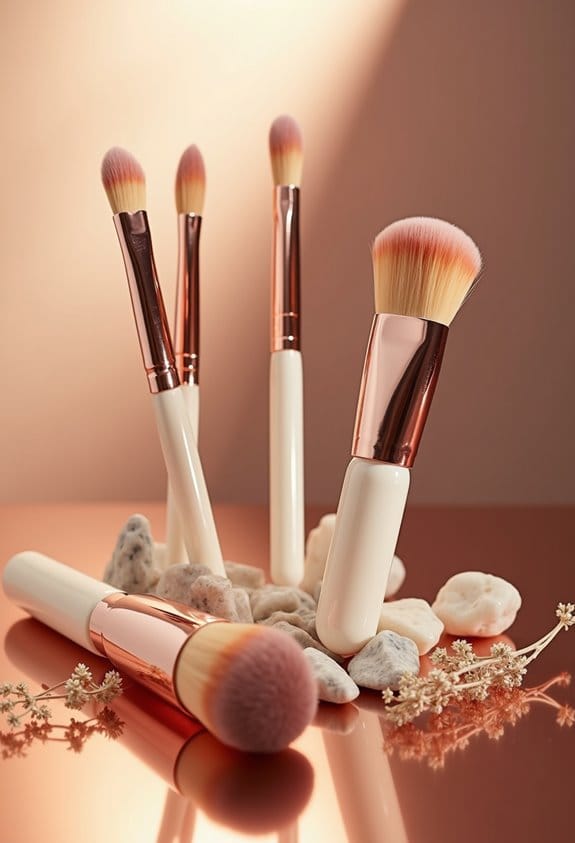
Let’s talk about antibacterial makeup brushes — those clever tools that go beyond just blending foundation or eyeshadow. Unlike regular brushes, antibacterial makeup brushes contain antimicrobial properties, often featuring agents like silver ions that reduce bacterial growth on brush fibers by up to 99.9%. This means they help keep our skin healthier by lowering the risk of skin irritations and acne lesions, which dermatologists highly recommend, especially for sensitive or acne-prone skin. Their smooth, non-porous surfaces enhance hygiene and safety better than traditional brushes, cutting bacterial survival by up to 80%. Since makeup products can be a breeding ground for germs, using brushes designed to fight bacteria isn’t just smart—it’s essential for maintaining skin health and avoiding unwanted breakouts. Trust me, your face will thank you! Regular use of makeup brush cleansers further reduces bacteria and extends the life of your tools, promoting both hygiene and durability.
Mechanisms Behind Antibacterial Technology
While we might not see them working with the naked eye, antibacterial technologies in makeup brushes are quietly doing some heavy lifting to protect our skin. The key player here is silver ions, which sneakily attack the bacterial cell walls and inhibit reproduction, cutting down microbial growth drastically. Imagine them as tiny bodyguards that keep contamination at bay, ensuring the cleanliness of our beauty tools. Some brushes even toss in activated charcoal to soak up impurities, doubling down on hygiene. This antibacterial technology doesn’t just protect us; it also keeps the performance of makeup consistent and skin-friendly. Just keep in mind, with lots of use and cleaning, these magical coatings can lose steam over time—so we still have to stay on top of washing those brushes regularly! Additionally, using brushes made from synthetic fibers helps minimize bacterial buildup since these materials are less porous than natural hair.
Comparing Natural and Synthetic Makeup Brushes
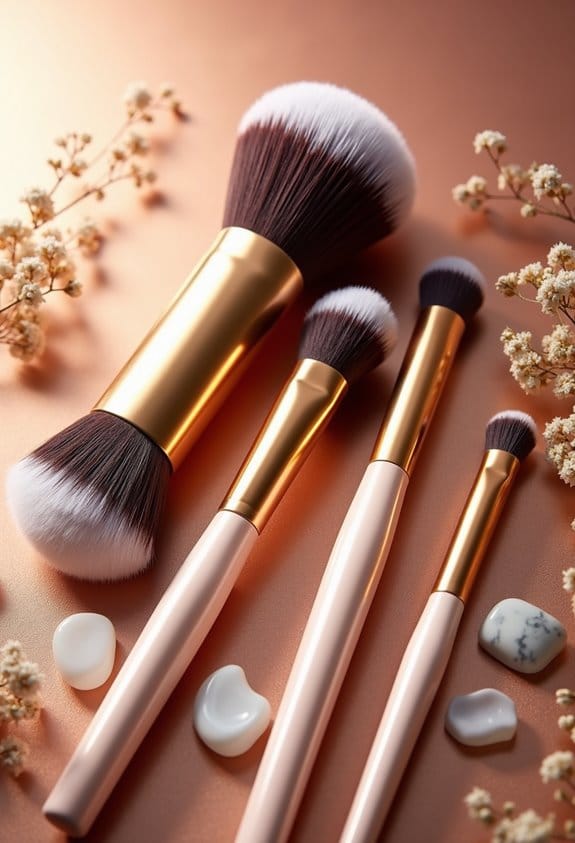
We’ve seen how antibacterial coatings like silver ions keep our synthetic brushes from turning into bacterial hotspots, but that’s just one way these tools play their part. Synthetic makeup brushes, often made of nylon or taklon, benefit from antimicrobial technology that helps reduce skin infections while offering precise application, especially for liquid and cream products. Natural brushes, crafted from animal hair like sable or goat, excel in softness and blending powder products but don’t have built-in antibacterial features. Their delicate fibers demand gentle cleaning methods to avoid damage, unlike synthetic brushes that handle more vigorous maintenance. Understanding these differences in performance and upkeep is essential for consumer choices, ensuring your tools boost both beauty and hygiene without any nasty surprises lurking in your makeup bag. A small price for flawless results, right? Additionally, many affordable brush sets incorporate vegan synthetic fibers which align with ethical consumer values and enhance hygiene.
Maintenance and Longevity of Antibacterial Brushes
Although antibacterial brushes sound like magic wands for keeping our tools germ-free, they’re not invincible and need some TLC to stay in tip-top shape. Regular cleaning is essential to maintain brush integrity and hygiene because microbial growth still sneaks in from product residue and the environment. The special coatings that fight germs usually last around 60 days, like with the Sephora Collection Deluxe Antibacterial Brush Set, so replacing brushes periodically is key to preserving their performance and longevity. Natural hair antibacterial brushes require gentler cleaning, while synthetic ones can handle stronger sanitization practices without losing effectiveness. Consistent maintenance routines not only extend the life of our brushes but also help prevent the breakdown of those antibacterial coatings—saving us from the awkward surprise of a less-than-sparkling brush. Using alcohol-free formulas in cleaning solutions can further protect the delicate fibers and antibacterial coatings on makeup brushes.
Expert Insights on Antibacterial Brush Use
Since we all want our makeup routine to be both flawless and hygienic, experts often highlight the remarkable role antibacterial brushes play in achieving that balance. Antibacterial brushes, often infused with silver ions, help reduce the risk of bacteria on our skin, especially for those with sensitive skin or prone to acne lesions. Pro makeup artists swear by these tools, including them in professional makeup kits to guarantee a cleaner application and boost overall hygiene during makeup application. However, let’s not fool ourselves: even antibacterial brushes need a weekly wash to stay effective. Expert recommendations consistently remind us that these brushes not only improve skin health but also make our beauty routines safer, proving hygiene and flawless makeup can happily coexist—without turning our brushes into germ magnets! Choosing brushes with synthetic bristles can also aid in maintenance, as they are often non-shedding and easier to clean.
Frequently Asked Questions
How Much Bacteria Is in Makeup Brushes?
We find makeup brushes often harbor significant bacteria growth, risking contamination. Proper brush cleaning improves makeup hygiene, reduces bacteria transfer, protects skin health, extends product lifespan, and helps synthetic fibers and natural bristles maintain effective makeup application.
What Do You Mean by Antibacterial Properties?
Antibacterial properties mean antimicrobial agents inhibit bacteria types to boost makeup safety. We must prioritize brush cleaning and tool maintenance for hygiene importance, skin health, infection prevention, product longevity, and consumer awareness about ongoing care.
How Do Antibacterial Materials Work?
Think of an antimicrobial surface as an invisible fortress, blocking bacteria and boosting makeup hygiene. By improving brush maintenance and cleaning frequency, we enhance material effectiveness, prolong product lifespan, guarantee safety standards, and positively impact skincare—all with consumer awareness in mind.
Do Face Brushes Hold Bacteria?
Yes, face brushes do hold bacteria, so makeup hygiene is key. We should prioritize brush cleaning in our daily routine to prevent bacteria growth, avoid bacteria transfer, maintain skin health, and reduce skin reactions while keeping tool maintenance and cleaning frequency in check.