As an Amazon Associate, we earn from qualifying purchases. Some links on this site are affiliate links at no extra cost to you. Our recommendations are based on thorough research and editorial judgment.


Understanding the Difference Between Stippling and Buffing

We often mix up stippling and buffing, but here’s the scoop: stippling uses a duo-fiber brush to tap tiny dots, creating a sheer, airbrushed finish that feels light—perfect for everyday wear. Buffing, on the other hand, involves circular motions with a dense, round brush to build up coverage and achieve a polished look, though it can highlight dry patches if you’re not careful. Both need the right brush and technique, and mastering them can seriously upgrade your makeup game. Stick with us, and you’ll find out how to pick the perfect brush and apply like a pro.
Key Takeaways
- Stippling uses tiny dot application with dual-fiber brushes for a sheer, airbrushed finish.
- Buffing employs circular motions with dense brushes to build coverage and create a polished look.
- Stippling is ideal for natural, lightweight makeup, while buffing adds depth and coverage.
- Stippling requires more practice for blending, whereas buffing is quicker and easier to apply.
- Choosing the right brush shape enhances technique effectiveness and makeup finish quality.
What Is Stippling and How to Use It
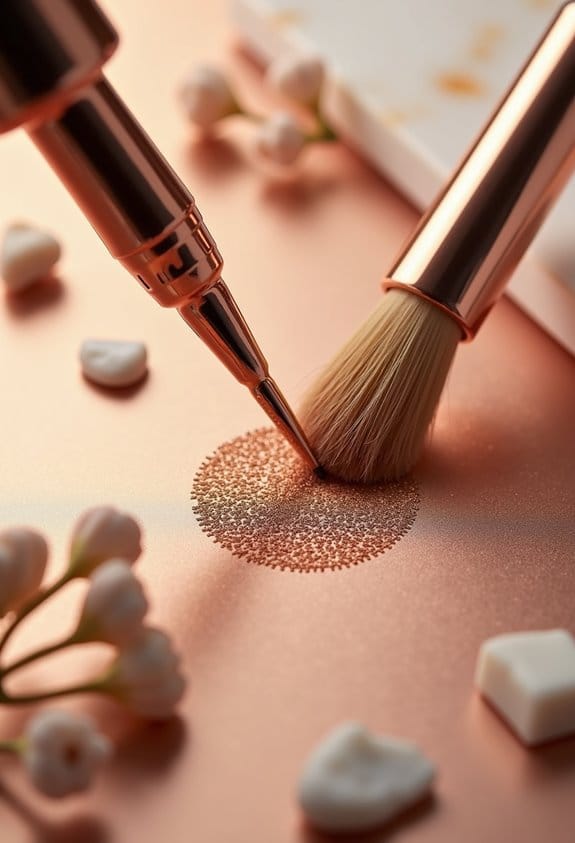
Stippling is like painting with tiny dots to create a smooth, natural finish — think of it as the makeup world’s version of pointillism. Using a stippling brush with its dual-fiber bristles, we apply liquid foundation in small dots. This clever design guarantees even distribution, preventing the brush from hoarding too much product. When we master this application technique, the foundation blends seamlessly, providing sheer to medium coverage that feels light but conceals imperfections beautifully. Applying makeup under ideal lighting helps us spot any missed spots, guaranteeing a flawless finish. The result? An airbrush-like finish that looks effortlessly polished without caking. We’ve found this method perfect for everyday wear, helping our skin look naturally flawless, even on busy mornings when we’re rushing and definitely need a makeup win. Using brushes with ergonomic handles also enhances control during application, making the stippling technique easier and more comfortable to perform.
Recommended Products

No More Cakey Foundation: Duo fiber technology features short bristles that hold product while long bristles blend seamlessly, creating a sheer airbrushed finish that disguises scars and acne without heavy buildup. The stippling brush technique delivers professional coverage that diffuses foundation naturally across your skin, leaving you with a flawless base that enhances rather than masks your natural beauty.
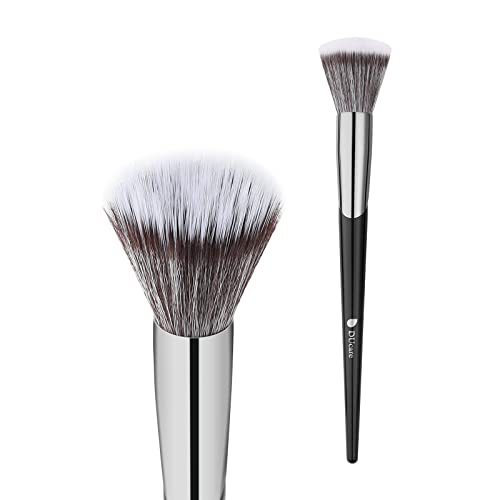
Airbrushed Finish Every Time: Dual-fiber bristles blend blush, bronzer, and foundation seamlessly for a soft, natural glow—no streaks, no harsh lines.

AMAZING AIRBRUSH LOOK - Create an airbrushed, beautiful finish. Use with any type of makeup.
Benefits of Buffing and When to Apply It
Once we’ve nailed the art of stippling for that smooth, natural finish, buffing steps in as the go-to technique when we need a quick, sheer coverage boost. Buffing uses small, circular motions to guarantee even coverage and flawless product distribution, giving our foundation a polished finish without the hassle. We always start with a light application—this way, we can layer up without the fear of cake-face making an appearance. Buffing works wonders with both powders and blush, blending everything seamlessly into the skin. But heads up, if you’ve got sensitive skin, buffing might not be your best friend since it can highlight dry patches or irritate prone areas. When time’s tight, this technique is a real lifesaver for that fuss-free, natural glow. Using tools with adjustable brightness can help ensure you apply your makeup evenly and avoid missed spots.
Recommended Products

【Two Essential Face Makeup Brushes】This set has two essential make up brushes. The Ultra Plush Blush Brush is for applying and blending cheek products such as blush, bronzer, and highlighter. The Blurring Foundation Brush is for creating a smooth foundation base with cream liquid. Together, they meet all the basic needs of face makeup.

MAKEUP BRUSH FOR CREAM & POWDER: The only makeup brush you’ll ever need for creating a gorgeous-as-e.l.f., airbrushed-looking complexion. This makeup brush is a two-in-one brush designed for use with your favorite cream and powder face products.

【Powder & Blush Pro Kabuki Brush】 Perfectly Blends Mineral Foundations, Creates Airy Finish, & Minimizes Redness on Cheeks. Expert-Grade Bristles Deliver Seamless Coverage for Full Face, Jawline, & Contouring.
Comparing Stippling and Buffing Techniques
When it comes to choosing between these two popular makeup techniques, knowing how they differ can save us from ending up with either a too-heavy mask or a patchy finish. Stippling involves gently dotting liquid foundation with duo-fiber brushes, offering sheer to medium coverage for a natural look. It’s perfect when we want that light, airbrushed effect, though it requires some practice to master the blending and application. Buffing, on the other hand, uses densely packed round brushes in small circular motions to distribute foundation evenly—this technique boosts coverage and creates a flawless finish but might show dryness if we’re not careful. So, while stippling leans toward subtlety, buffing shines when we want polish and depth. Both have their place; it really depends on the look we’re going for. Alternatively, using the correct makeup sponge shape can enhance either technique’s effectiveness by providing better blending and coverage control.
Recommended Products

Natural Airbrushed Finish: Premium duo-fiber technology combines long and short synthetic bristles to deliver light, buildable coverage that prevents over-application while creating seamless blending. Perfect for achieving that professional, natural look without the guesswork or heavy-handed results that frustrate busy beauty enthusiasts.

ULTIMATE CREAM BLUSH SAVIOR: This duo fiber stippling brush is a master at blending intense colors into a soft natural flush. The sparse tips pick up less pigment, ensuring your cream blush looks like a glowing from within complexion rather than a clown look. Perfect for achieving that breathable your skin but better finish.

【PRO Gently Foundation Make up Brush】This brush has Stipple soft, dense bristles with varying lengths for natural,buildable foundation coverage.It keeps foundation from settling into pores for a smooth finish and is gentle on sensitive or textured skin.
Choosing the Right Brush for Each Technique
Choosing the right brush can make or break our foundation game, especially after deciding between stippling and buffing techniques. For stippling brushes, we want duo-fiber designs with a mix of short and long synthetic fibers that allow foundation application in tiny dots, creating that coveted airbrushed look through seamless blending. On the flip side, buffing brushes are round and densely packed, perfect for blending foundation with a circular motion to achieve a polished finish without streaks. Don’t overlook brush shapes—they dictate how the product integrates with the skin. Picking the proper brush based on our desired finish means better control, less product waste, and, ultimately, a flawless result. Honestly, knowing our brushes feels like having a secret weapon in the beauty arsenal; once mastered, our foundation game levels up effortlessly. Additionally, the ergonomic handle design of a brush can enhance comfort and control, making application easier and more precise.
Recommended Products

DUO-FIBER BRISTLES: Dual-length synthetic fibers pick up and diffuse foundation, cream, or powder for a smooth, buildable, airbrushed finish.

🌸PRO STIPPLE BRUSHES SET: This beauty set with more cost-effective includes 1pcs Large Flat Top Stippling Brush and 1pcs Small Fine Stippling Brush

DENSE makeup brush with flat head, perfect as a buffing and blending brush. The brush measures 5.71 inch in length and the brush head diameter is 1.2 inch
Tips for Mastering Both Stippling and Buffing
Mastering both stippling and buffing takes a bit of practice, but it’s definitely doable if we pay attention to the details. For stippling motions, lightly tap a stippling brush to create tiny dots, blending quickly for that flawless airbrushed finish. When buffing, a buffering brush with densely packed bristles is key—apply foundation in small circles using a light hand to build desired coverage without caking. Proper lighting helps us spot uneven application, ensuring we don’t miss those tricky spots. And hey, cleaning your brushes after each use? Absolutely non-negotiable—it keeps the bristles in top shape for smooth, even application every time. It’s like having a trusty sidekick; your brushes want to work well, so let’s treat them right and nail both techniques together! Using gentle cleansers to clean your brushes can effectively maintain their quality and prolong their lifespan.
Frequently Asked Questions
What Is the Difference Between Buffing and Stippling?
Buffing uses densely packed brushes for full coverage and a polished finish, ideal for cream foundations. Stippling employs duo-fiber brushes with light, dotted layers, creating a sheer, natural look—both great makeup techniques for different skin types and textures.
What Is the Point of a Stippling Brush?
The point of a stippling brush is to create flawless foundation application using unique stippling techniques. By mastering brush types and blending methods, we elevate our beauty routines, improve product longevity, and perfect contouring tips with these essential makeup tools.
When to Use Stippling?
We use stippling when we want a lightweight, natural finish with foundation application, especially for uneven skin types. This technique’s great for texture enhancement, layering products smoothly, and requires specific brush types and blending methods for speed and flawless results.
What Does Buffing Mean in Makeup?
Buffing means gently blending foundation with circular motions using dense, round makeup tools. We use this beauty technique for smooth makeup finishes, adjusting product selection and blending methods based on skin type for flawless everyday makeup and color correction.