As an Amazon Associate, we earn from qualifying purchases. Some links on this site are affiliate links at no extra cost to you. Our recommendations are based on thorough research and editorial judgment.

The Role of Brush Ferrule Quality in Tool Longevity

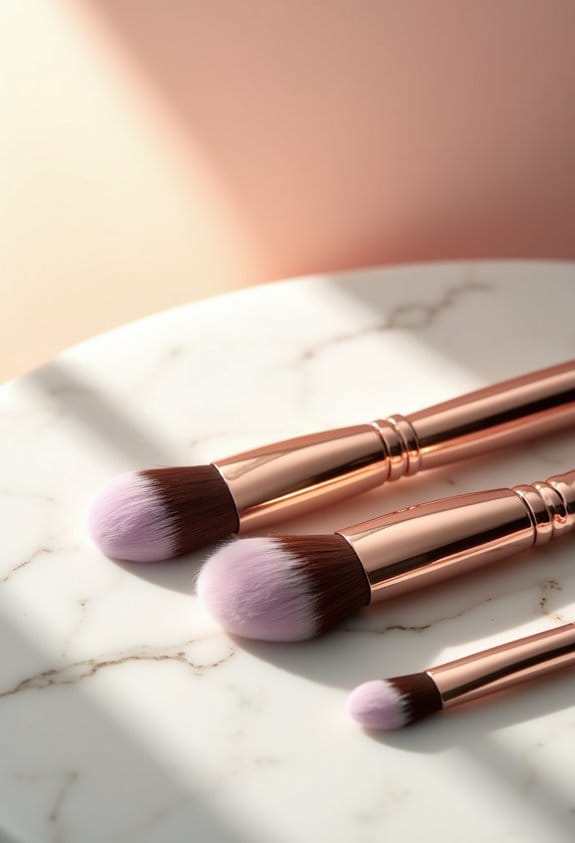
We all know a makeup brush feels useless if the bristles start falling out halfway through—blame the ferrule quality for that! This little metal band, often aluminum or nickel-plated brass, tightly grips the bristles and keeps them secure. Poor ferrules mean loose hairs and a shorter brush life, while high-quality ones prevent corrosion and maintain shape thanks to strong adhesives and precise crimping. Stick around, and you’ll uncover how these unsung heroes really boost your tool’s lifespan.
Key Takeaways
- High-quality ferrules secure bristles firmly, preventing shedding and extending brush lifespan.
- Durable materials like nickel-plated brass resist corrosion, ensuring long-term structural integrity.
- Precise crimping and strong adhesive bonds create a stable connection between handle and ferrule.
- Ferrule thickness contributes to shape retention and prevents deformation during use.
- Proper maintenance of ferrules, including gentle cleaning and upright storage, prevents damage and prolongs tool durability.
Anatomy of a Makeup Brush Ferrule

Let’s plunge into the backbone of any reliable makeup brush—the ferrule. This metal piece connects the bristles to the handle, making the whole makeup brush secure and durable. Think of aluminum ferrules—they’re lightweight but tough, keeping bristles snug without weighing the brush down. When the ferrule’s quality is on point, it stops bristles from shedding and keeps the brush’s shape intact, even after many uses. We’ve noticed how a well-crimped ferrule adds balance, letting us apply makeup with precision. So, next time you pick a brush, check out the ferrule—its material and finish matter just as much as the handle or bristles. Trust me, a sturdy ferrule means consistent performance, which every makeup lover deserves. Choosing brushes with aluminum ferrules not only improves durability but also enhances the overall longevity of your toolset.
Why Ferrule Quality Affects Brush Durability

We’ve seen how the ferrule isn’t just a piece of metal—it’s the lifeline keeping bristles locked in place, but its quality goes way beyond that. Ferrule quality affects brush durability by ensuring secure bristles and stable brush construction. Poor ferrule craftsmanship leads to loose bristles and a shorter tool lifespan. Using materials with excellent corrosion resistance, like stainless steel or nickel-plated brass, avoids rust and wear, whereas a lightweight option like aluminum, though easy to handle, might sacrifice longevity if not well-treated. Quality assurance is key; testing for adhesion strength and corrosion prevents premature failure. Since we rely on our brushes daily, peak performance depends heavily on these details that often go unnoticed. Trust me, a solid ferrule means a brush that won’t give up on you anytime soon. Additionally, aluminum ferrules can enhance brush stability and lifespan when designed with durability in mind.
Materials Commonly Used in Makeup Brush Ferrules
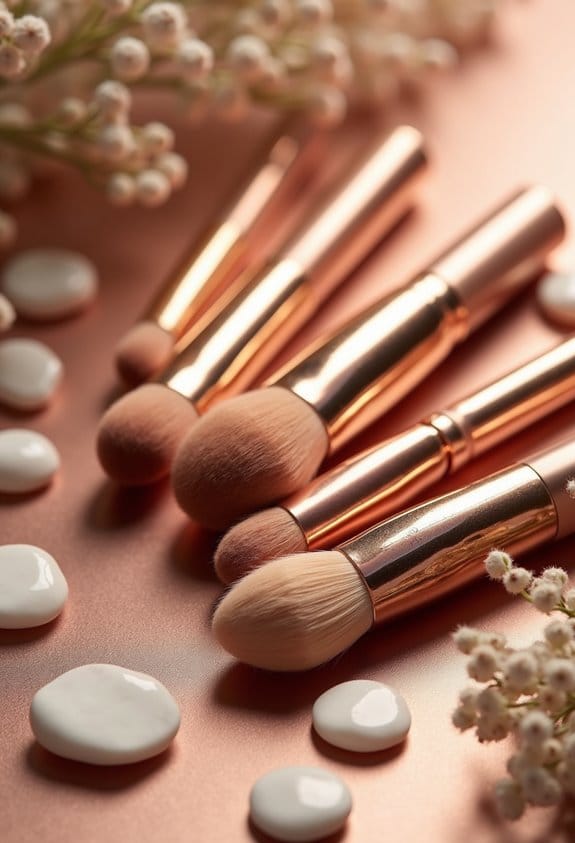
Choosing the right material for a makeup brush ferrule is like picking the perfect frame for a favorite painting—it sets the tone and makes all the difference. In brushes, common materials for ferrules include aluminum, brass, and copper. Aluminum ferrules are lightweight and budget-friendly, though they might dent easier, which can be a bit annoying if you’re clumsy, like us. On the flip side, brass ferrules shine with strength and corrosion resistance, often found in higher-end brushes—they give a nice luxe feel we appreciate. Copper ferrules resist tarnishing and are perfect for natural hair brushes, but they’re heavier and pricier. All these materials affect durability differently, so selecting quality makeup brush ferrules guarantees your tools last longer—saving you money and frustration over time. Additionally, choosing ferrules made with durable materials helps prevent shedding and maintains the brush shape, enhancing overall brush longevity.
Comparing Copper and Aluminum Ferrules
After getting a handle on the common materials used in brush ferrules, it’s worth zeroing in on two popular contenders: copper and aluminum. Copper ferrules stand out for being durable and resistant, especially with impressive corrosion resistance that keeps high-quality brushes looking sharp. They keep bristles secure and maintain shape excellently but tend to be heavier and need more maintenance to avoid tarnishing—think of them as the premium, slightly high-maintenance members of the brush world. Aluminum ferrules, on the other hand, are lightweight and budget-friendly, great for flexible designs, but they can dent or scratch without careful handling. Overall performance favors copper for longevity and bristle retention, yet aluminum’s affordability makes it perfect if you’re not quite ready to splurge—because hey, we all love a steal that still works well! Additionally, ergonomic handle design paired with ferrule quality enhances comfort and control during makeup application.
How Ferrule Design Impacts Brush Performance
Although the material of the ferrule matters, its design is what really makes or breaks a brush’s performance. We’ve learned that a well-made ferrule guarantees the bristles stay securely in place, which is an important consideration if you want to prevent damage and shedding. The shape and thickness of the ferrule support the brush’s durability and help maintain the bristles’ form during use, directly affecting the brush’s overall quality and performance. Ferrule materials like aluminum or brass influence not only weight but also resistance to wear and corrosion, so a smart design takes both material and function into account. Think of the ferrule as the unsung hero holding the bristles to the handle—get it right, and your brush will thank you every time you reach for it. Additionally, metal ferrules contribute to the brush’s durable construction, ensuring longevity and consistent performance over time.
Techniques for Attaching Ferrules to Handles
We’ve seen how a ferrule’s design can make a big difference in brush performance, but securing that ferrule to the handle is another step where quality really shines. The ferrule is the metal that connects the handle while securing the bristles, and using high-strength adhesives is key for a long-lasting bond. We’ve noticed that a precise fit between the ferrule’s hole and handle diameter guarantees structural integrity, preventing wobble or loosening. After applying adhesive, crimping the ferrule creates a mechanical bond that really locks everything in place, almost like giving the brush a firm handshake. Proper alignment during this attachment process is critical—it keeps the bristles in shape and boosts overall performance. Trust us, a poorly attached ferrule is just asking for trouble down the line! Additionally, maintaining brush hygiene with effective cleaning routines helps extend the lifespan of the entire makeup tool, including the ferrule attachment.
Quality Assurance Tests for Ferrule Longevity
When it comes to making certain ferrules stand the test of time, quality assurance tests are our best friends. These tests confirm that ferrules offer the strength and durability brushes need. Dimensional accuracy checks verify the metal part fits perfectly—no wobbles allowed! We also run material hardness testing to validate structural integrity, so ferrules don’t dent or warp under pressure. Adhesion durability tests are vital since poor glue means no brush longevity. We stress-test corrosion resistance by exposing ferrules to moisture and cleaners, simulating real-world wear and tear. Friction and scratch resistance tests keep our ferrules looking sharp, literally. Together, these quality assurance measures build ferrules tough enough for daily use, assuring they stay solid, secure, and corrosion-free—because your tools deserve a long, productive life. Proper care and gentle cleaning methods also contribute significantly to maintaining the ferrule’s integrity and overall brush lifespan, as emphasized in cleaning and maintenance practices.
Common Ferrule Issues and How to Prevent Them
A handful of common issues can sneak up on ferrules over time, messing with the connection between the handle and bristles in ways none of us want. In Ferrule in Makeup, loose ferrules often arise from inferior adhesives or impacts, which is why a firm commitment to quality during manufacturing matters so much. Common materials like aluminum or copper can corrode if brushes aren’t cleaned properly, leading to rust that weakens the ferrule. Bristle shedding is another pesky problem linked to poor ferrule construction, making it essential to choose brushes designed to prevent bristle shedding. By focusing on overall quality and handling brushes properly, we can extend the life of our tools and keep them working like new longer—because who wants a loose ferrule ruining makeup time? Many premium vegan brush sets use recycled aluminum ferrules, combining durability with environmental responsibility to enhance longevity and performance.
Proper Maintenance Practices for Ferrules
Keeping a ferrule in tip-top shape isn’t just about buying a good brush and hoping for the best—it takes some thoughtful care on our part. Ferrules play an essential role in holding bristles and handles tightly, so proper maintenance practices are key to brush longevity. We need to clean gently using mild soap and water to remove product buildup and prevent corrosion without soaking the brush—too much water weakens the glue inside. Wiping ferrules with a soft cloth keeps scratches at bay, which helps maintain longevity. Plus, regularly inspecting ferrules for wear signs like rust or looseness lets us catch issues early. Storing brushes upright also protects ferrules from bending. With these simple steps, we keep our tools performing strong and looking sharp, just like we want. For optimal hygiene, it’s important to follow cleaning and maintenance routines regularly to prevent buildup and extend tool life.
Selecting Makeup Brushes Based on Ferrule Quality
Although we often focus on bristles when picking out a makeup brush, the quality of the ferrule is just as essential for long-term performance and durability. The makeup brush ferrule, a small but critical component, plays a key role in ensuring that the bristles stay firmly attached, preventing annoying shedding during makeup application. Professional makeup artists often prefer ferrules made from nickel-plated brass, common in high-end brushes, because they resist tarnishing and handle pressure better than aluminum. When selecting a type of brush, we should examine ferrule thickness—the sturdier, the better for shape retention and precision. We’ve learned that opting for high-quality ferrules means your brush won’t just look good—it’ll perform consistently, making every makeup application smoother, easier, and honestly, more enjoyable. Additionally, brush durability is a significant factor, as high-quality materials in the ferrule directly contribute to the overall longevity and performance of the tool.
Innovations in Eco-Friendly Ferrule Materials
When we think about ferrule quality, it’s easy to picture sturdy metals like brass or aluminum holding our brush bristles tight. But eco-friendly ferrule materials are shaking things up with innovative materials like bamboo and recycled plastics that cut down environmental impact without skimping on durability standards. Some brands are even testing biodegradable composites that quietly break down over time, alongside plant-based resins that boost strength and appeal to sustainability-conscious consumers. Thanks to advanced manufacturing techniques like precision molding, these ferrules come out lighter yet tougher, proving you don’t have to sacrifice function or aesthetic appeal for a greener choice. Honestly, it’s exciting to see how these sustainable switches keep our tools strong and our planet happier—proof that eco-friendly doesn’t mean eco-flimsy.
Frequently Asked Questions
Does Quality of Paint Brush Matter?
They say, “You get what you pay for.” When it comes to paint application, choosing professional tools with quality bristle types improves user experience, brush maintenance, durability factors, and cleaning techniques, unlike budget options that compromise drying methods and results.
What Is the Purpose of a Ferrule?
The ferrule’s purpose is to guarantee ferrule alignment and secure bristles using various ferrule types and materials. Proper ferrule design and maintenance boost ferrule functionality, performance, and lifespan, preventing shedding while enhancing the ferrule’s effects.
What Is the Ferrule of a Brush?
We see the brush ferrule as the metal part connecting bristles to the handle, whose materials, construction, and design affect durability and function. Proper maintenance and secure attachments guarantee lasting performance despite different ferrule shapes and effects.
How Many Years Do Makeup Brushes Last?
Makeup brushes last 2 to 10 years depending on replacement frequency and care. We recommend brush maintenance tips, proper brush storage techniques, cleaning methods, checking signs of wear, and consulting user experiences and brand comparisons in your purchasing guide.


