As an Amazon Associate, we earn from qualifying purchases. Some links on this site are affiliate links at no extra cost to you. Our recommendations are based on thorough research and editorial judgment.


How Tool Storage Affects Brush Performance

We all know a paintbrush is only as good as how we treat it, right? Storing brushes upright with bristles facing up keeps them in shape and avoids that frustrating fraying. Toss them in a humid spot or lying bristle-down, and mold or warped handles can sneak in, ruining smooth strokes. Using protective covers and cool, dry storage not only extends brush life but guarantees your next project glides on like a dream. Stick around to discover how to give your tools the VIP treatment they deserve.
Key Takeaways
- Storing brushes upright with bristles facing up prevents bending, fraying, and loss of shape, maintaining smooth paint application.
- Keeping brushes in cool, dry conditions avoids mold growth and bristle degradation, especially in natural bristles.
- Protective cases shield brushes from dust, debris, and accidental damage during storage and transport, preserving performance.
- Exposure to extreme temperatures can warp handles, reducing grip control and overall brush effectiveness.
- Regular checks and adjusting storage to optimal environments help detect wear early, ensuring consistent brush quality.
Importance of Proper Brush Storage
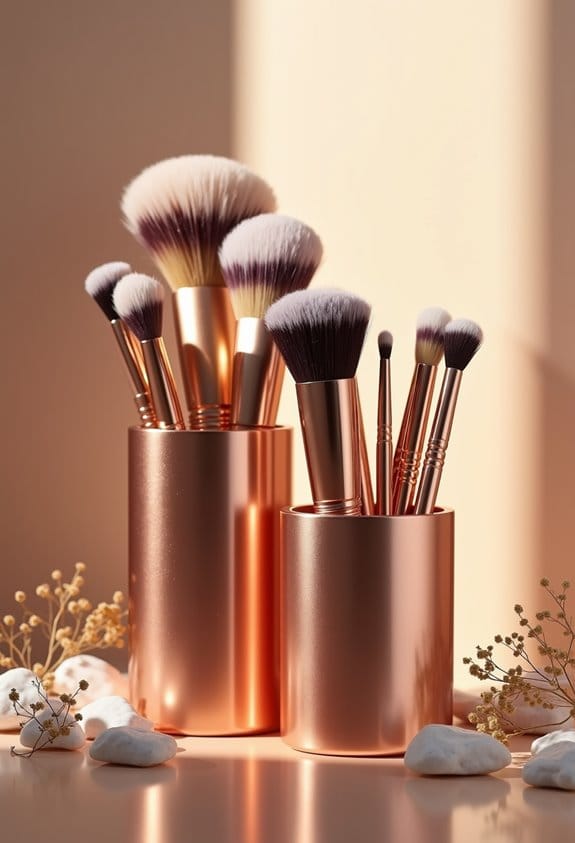
While it might seem simple, how we store our paintbrushes actually makes a world of difference to their performance and longevity. Proper care starts with storing brushes upright, bristles facing up—this little trick prevents bending and fraying, keeping them in optimum condition. We’ve found that a cool, dry spot is best since high humidity can cause mold and damage, especially on watercolor brushes with natural bristles. Using protective cases shields brushes from dust and accidental wear, so they’re ready for the next project. Maintaining brushes with frequent maintenance checks helps us spot early signs of wear, letting us replace damaged ones before they affect brush performance. Trust me, treating brushes this way feels like giving your favourite tools a well-deserved spa day every time. Additionally, storage solutions like foldable designs and multifunctional cases help organize brushes efficiently while offering protection.
Effects of Improper Storage on Brush Performance

Neglecting proper brush storage can sneakily wreck their shape and performance faster than we’d like to admit. When we store brushes improperly—like leaving them stacked or with bristles facing down—they lose their shape, causing frayed bristles that mess up smooth paint application. Humidity’s another sneaky villain; it invites mold that degrades bristle quality, making our brushes less reliable. Plus, without protective caps during transport, dust and debris settle in, further hurting their ability to perform at their best. We’ve learned the hard way that even extreme temperatures warp brush handles, affecting grip and control. So, next time you stash your brushes, remember: how we’re storing them plays a major role in keeping those bristles ready for flawless paintwork. Regular cleaning and proper storage in a clean, dry place are essential steps to extend the lifespan and maintain the performance of your brushes.
Ideal Conditions for Storing Paint Brushes
Because we want our paint brushes to last and perform consistently, storing them in the right conditions is key. We need to store brushes in a dry, cool place to prevent moisture buildup, which can cause mold and damage those precious bristles. Keeping brushes upright, bristles facing up, helps maintain their shape—though laying them flat works too if space is tight. Extreme temperatures are a no-go since heat warps handles and humidity invites unwanted bacteria. Using protective covers shields brushes from dust and accidental harm, which keeps them in ideal condition. Don’t forget regular inspecting; catching early wear helps us maintain performance and know when it’s time for replacements. Treating brushes like delicate tools, not just paint applicators, makes all the difference in storage and longevity. Additionally, maintaining the soft nylon bristles by reshaping them after cleaning helps preserve their form during storage.
Techniques to Maintain Brush Shape
If we want our paint brushes to keep performing at their best, maintaining their shape after each use is absolutely vital. Right after cleaning, it’s important to gently reshape the bristles to their original form—this helps guarantee peak condition. When we store brushes, we should always place them upright with bristles facing up, avoiding harsh pressures that can bend or fray them. Using protective covers or holders is a smart move; they shield the bristles during storage and transport. Plus, it’s wise to avoid moisture by keeping brushes away from humid spots since damp environments can cause mold and ruin the bristles. So, when we store paintbrushes properly and respect their delicate nature, we make certain they’re ready for our next artistic adventure without any surprises. Additionally, just like makeup sponges, storing tools in a clean, dry environment while allowing for proper airflow is essential to prevent bacterial growth and preserve their integrity, exemplifying the importance of proper tool storage.
Protecting Brushes From Environmental Damage
We’ve talked about keeping our brushes in great shape right after cleaning, but what about guarding them day-to-day from the environment? Storing brushes in a cool, dry environment is key to preventing moisture buildup that can cause mold and degrade bristles. Using protective covers keeps dust and dirt off, which otherwise leads to wear and tear that dulls performance. We’ve noticed that keeping brushes upright with bristles up helps maintain their shape, avoiding unnecessary pressure that can deform these delicate fibers. Avoid extreme temperatures too—both scorching heat and freezing cold can make bristles brittle or limp, which is just no good for painting. Watching for signs of environmental damage regularly helps catch issues early, so our brushes stay sharp and ready to perform their best without degrading over time. Additionally, using brush holders or cases improves organization and helps maintain brush shape, contributing to their longevity.
Monitoring and Adjusting Storage Practices
Keeping an eye on our brush storage setup isn’t just about tidiness—it’s essential for making sure our brushes stay in top shape. We need to regularly monitor humidity and temperature because too much moisture or heat can warp bristles or cause mold, which kills performance. Organizing brushes upright, bristles up, or in dedicated holders helps maintain their shape, preventing that dreaded splayed look we all hate. Using protective cases during transport preserves their integrity by keeping dust and bumps at bay, extending the lifespan of our tools. Adjusting storage practices—like shifting to a cool, dry spot—makes a big difference in maintaining ideal performance. It’s like giving our brushes a little spa treatment, ensuring they’re always ready for their next masterpiece. Incorporating adjustable height options in storage setups can optimize space and maintain brush condition more effectively.
Frequently Asked Questions
How Should Brushes Be Stored?
We should store brushes vertically using proper brush alignment techniques, in containers with breathable materials to control temperature humidity impact. Using brush cover options and travel storage solutions helps maintain bristle shape. Rotating brush inventory guarantees long term storage tips.
How to Adjust Brush Smoothness?
We adjust brush smoothness by following brush maintenance tips: using effective cleaning techniques, applying brush conditioning methods or smoothing agents, drying brushes ideally, preserving bristle shape, monitoring performance degradation signs, and making painting technique adjustments for best results.
How to Keep a Paint Roller From Drying Out?
To keep a paint roller from drying out, we wrap the roller cover tightly in plastic or place it in sealable bags. Controlling storage temperature, humidity levels, cleaning techniques, and considering paint type guarantee moisture retention during breaks.
What Is the Difference Between 5 0 and 10 0 Paint Brushes?
It is understood that size comparison can confuse, but 5/0 brushes suit broad strokes with stiffer bristles, while 10/0 excels in detail painting. Stroke width, paint application, and brush control really depend on canvas texture and your technique.